

Hypoallergenic Mattress for Allergies in NI: Your 2026 Guide
Could a “hypoallergenic mattress for allergies NI” search lead you to a label that promises more than a mattress can deliver? In the UK, “hypoallergenic” has no official definition for mattresses, so the wording alone doesn’t prove a product will ease allergy symptoms.
It’s understandable to hope a new mattress will make nights more comfortable, but it plays only one part in an allergy-conscious bedroom. Dust mites and their allergens can also be present in bedding and soft furnishings, and no mattress can cure an allergy or remove every mite.
This guide explains what to compare in mattress construction and care instructions, and how to spot claims that need a closer look. It also covers practical care steps, including barrier covers and washing bedding, to help you make an informed choice for your home in Northern Ireland.
Sheepbridge Sofas & Beds is a family-run retailer based in Newry, with pocket sprung and memory foam mattresses to explore online or at its showroom. Free delivery is available across Northern Ireland, making it easy to plan a local purchase.
Key Takeaways
- When comparing a hypoallergenic mattress for allergies NI, look beyond the label and consider what evidence supports the claim.
- Compare pocket sprung and memory foam mattresses by construction, comfort preference and care instructions, not by assumptions about allergy performance.
- Use a simple buying order: identify your needs, compare mattress types, read care guidance and check the fit for your bed.
- Think about bedding and other bedroom sources of allergens too, so your mattress choice fits into a wider care routine.
- Explore pocket sprung and memory foam options through Sheepbridge’s online store or Newry showroom, with free delivery across Northern Ireland.
What does a hypoallergenic mattress mean for allergy sufferers in Northern Ireland?
If you’re searching for a hypoallergenic mattress for allergies NI, it helps to know what the label can and can’t tell you. In plain English, “hypoallergenic” suggests a product is designed or described as less likely to cause an allergic reaction. But for mattresses in the UK, the term has no official standard or legal definition. A label alone doesn’t show exactly what has been tested, which allergens are addressed, or whether you’ll notice a difference.
That distinction matters. A mattress is one part of a bedroom, alongside pillows, duvets, bedding, flooring and dust. Its materials and care requirements may suit your needs, but choosing one isn’t a treatment for allergies and can’t guarantee symptom prevention. For general background on the term, see What does hypoallergenic mean?
For a visual overview of how mattress options are discussed for allergy-conscious shoppers, watch this Sleepopolis video:
Is hypoallergenic the same as allergy-proof?
No. Treat neither “hypoallergenic” nor “allergy-proof” as proof that a mattress contains zero allergens or will prevent symptoms. The words don’t account for every person’s sensitivities, and they can’t describe the conditions in each bedroom.
A mattress may be only one possible source of exposure. Bedding and dust elsewhere in the room can also matter. A product description can help you understand a mattress’s stated characteristics, but it can’t predict a medical outcome.
Why Northern Ireland shoppers should look beyond a label
For households across Northern Ireland, the same careful comparison applies: look for a clear description of the mattress materials, then read its care instructions and consider whether those suit your routine. “Hypoallergenic” by itself is vague; specific information gives you more to work with.
As you compare options, consider:
- Material details: Is the construction described clearly, rather than relying on a broad allergy-related claim?
- Care guidance: Can you follow the stated cleaning and maintenance instructions at home?
- Overall suitability: Does the mattress meet your comfort needs and fit your bed, as well as your care preferences?
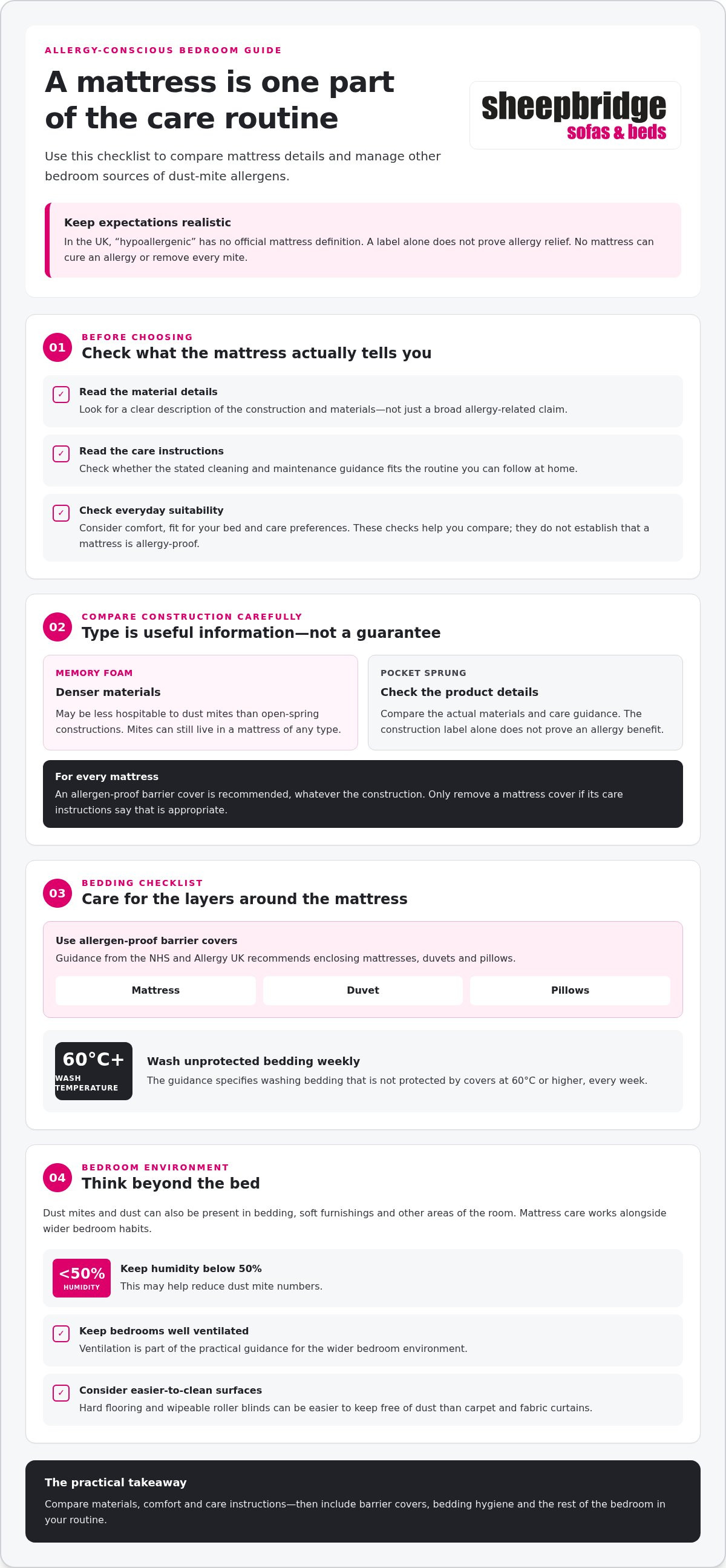
These checks won’t establish that a mattress is allergy-proof. They help you make a more informed purchase and understand what the wording does, and doesn’t, promise. Compare mattress constructions and care needs as practical features, while keeping the wider bedroom environment in view.
How dust mites and bedroom allergens relate to your mattress
House dust mites are tiny organisms found in indoor environments. They feed on shed skin cells and thrive in warm, humid places, including bedding and soft furnishings. For people who are sensitive to them, the allergens of concern are mainly particles from mite waste, not the mites biting or stinging.
A mattress can be part of this picture because it sits beneath bedding and is used for many hours at a time. But it isn’t the only possible source of exposure. Sheets, pillows, duvets, carpets, curtains and dust on other surfaces all contribute to the wider bedroom environment. The relevance of any one source can vary between households.
Where dust mites fit into the bedroom picture
Think of the bedroom as a connected space rather than treating the mattress as the whole problem. Mites can be present in bedding and other soft furnishings, while dust can settle on surfaces around the room. Their presence doesn’t automatically explain a person’s symptoms, and a mattress change alone can’t establish or treat an allergy.
Guidance from the NHS and Allergy UK focuses on practical steps beyond mattress choice. It recommends enclosing mattresses, duvets and pillows in allergen-proof barrier covers, washing unprotected bedding weekly at 60°C or higher, and keeping bedrooms well ventilated. Keeping humidity below 50% may also help reduce dust mite numbers. Hard flooring and wipeable roller blinds can be easier to keep free of dust than carpet and fabric curtains.
Mattress care matters because it sits alongside bedding hygiene, humidity control and regular dust management, rather than replacing them.
What mattress construction can and cannot tell you
Construction helps you understand what a mattress is made from and how to care for it. It doesn’t, by itself, prove an allergy benefit. Denser materials such as memory foam may be less hospitable to dust mites than open-spring constructions, but mites can still live in a mattress of any type. An allergen-proof barrier cover is recommended for every mattress, whatever its construction.
For pocket sprung and memory foam options, compare the actual product description and care guidance rather than assuming the category guarantees a particular result. Check which materials are specified, whether the instructions describe suitable cleaning methods, and whether any cover can be removed and cared for separately. Don’t remove a cover unless its care instructions say that’s appropriate.
- Construction: Note whether the mattress is pocket sprung or memory foam, without treating that label as proof of allergy protection.
- Care: Follow the stated cleaning instructions and use a barrier cover suited to the mattress.
- Bedroom routine: Keep bedding and other soft furnishings in your care plan, not just the mattress.
If you’re weighing up a hypoallergenic mattress for allergies NI, construction is one useful detail, not a prediction of how you’ll feel. Explore pocket sprung and memory foam mattress options as part of that practical comparison.
Which mattress features should allergy-conscious buyers in NI compare?
Start with the details you can assess: construction, comfort, materials and care instructions. These help you decide whether a mattress suits your sleep preferences and bedroom routine. They don’t, on their own, show that it will prevent allergies or reduce symptoms.
For a hypoallergenic mattress for allergies NI search, compare what each product actually says rather than assuming a mattress type is automatically allergy-friendly. A clear description of materials and maintenance gives you more useful information than a broad claim.
Pocket sprung or memory foam: what should you assess?
Pocket sprung mattresses use springs to support the sleeper; memory foam mattresses use foam as their comfort and support material. The feel can vary between individual mattresses, so consider how each option supports you and whether its surface feels comfortable. Don’t assume either category is universally better for allergies.
Check the product details side by side. Note the construction and any listed materials, then compare comfort and support for your own needs. If you’re shopping online, use the written description and care guidance; at a showroom, you can also consider how the mattress feels in person. Neither method turns a material choice into a health guarantee.
How to assess mattress covers and care instructions
Look for the care instructions provided for the specific mattress. They should guide routine maintenance and help you avoid cleaning methods that could damage its materials. Don’t assume a cover can be removed or washed unless the product information explicitly says so, and don’t treat a cover as mite-proof without evidence.
These details matter because your mattress needs to fit into a bedroom care routine you can keep up with. A barrier cover recommended for allergen management is a separate layer: choose one suited to the mattress and follow its own care instructions, alongside the mattress manufacturer’s guidance.
- Construction: Compare pocket sprung and memory foam descriptions without assigning either an automatic allergy benefit.
- Materials: Look for specific information about what the mattress contains.
- Comfort and support: Consider what feels suitable for your sleep preferences.
- Care: Read instructions for cleaning, covers and routine maintenance before deciding.
In short: construction and care details help you compare comfort, materials and upkeep; they don’t prove that a mattress is allergy-safe or will prevent symptoms. That’s a practical way to weigh pocket sprung and memory foam options without relying on assumptions. Explore mattress options at Sheepbridge Sofas & Beds as part of your comparison.
How to choose and care for an allergy-conscious mattress in Northern Ireland
A clear buying process keeps the decision practical. Start with comfort and fit, then compare construction and care instructions. Think of allergy-conscious choices as part of a bedroom routine, not a treatment or a promise that symptoms will stop.
A practical mattress-shopping checklist
Work through these steps in order so you can compare options on the same basis:
- Identify your needs. Consider the comfort and support you prefer, who’ll use the mattress and the size required for your bed.
- Compare construction. Review pocket sprung and memory foam descriptions, including any stated materials. Choose based on suitability and comfort, not an assumption that one type is allergy-safe.
- Read care guidance. Check how the mattress should be maintained and whether its instructions fit the routine you can manage. Don’t assume a cover is removable or washable unless the product details say so.
- Check the fit. Confirm the mattress dimensions match your bed frame before ordering. If you’re unsure about UK sizing, use the UK and Northern Ireland bed size guide to check measurements.
Comfort matters too. If you’re near Newry, visit the Sheepbridge showroom to consider mattress options in person. You can judge how the surface feels and whether the support suits your preference. Treat that as one part of the decision, alongside product details and care instructions.
Care habits that support a cleaner sleep space
Once you’ve chosen a mattress, follow its manufacturer’s care instructions. Cleaning methods and cover construction can differ, so avoid treating all mattresses alike. Use a suitable allergen-proof barrier cover as part of your bedroom routine, and follow the cover’s own guidance as well.
Keep the wider sleep space in view. NHS and Allergy UK guidance recommends washing bedding that isn’t protected by a barrier cover weekly at 60°C or higher. Regularly tending to bedroom dust, keeping the room well ventilated and managing humidity also matter; mattress care can’t replace these broader habits.
If allergy symptoms are persistent or severe, seek appropriate medical guidance rather than relying on a mattress change to address them. Your mattress choice is a household decision, not medical treatment.
For shoppers weighing up a hypoallergenic mattress for allergies NI, a consistent checklist helps separate useful product information from assumptions. Explore pocket sprung and memory foam mattress options online or at the Newry showroom, and use the care details to decide what fits your needs and routine.
Explore mattress options with Sheepbridge Sofas & Beds in Newry
Choosing a mattress is a personal decision, and allergy-conscious shopping is best approached with clear expectations. Sheepbridge Sofas & Beds is a family-run retailer based in Newry. Its range includes pocket sprung and memory foam mattresses, giving shoppers different constructions to compare without assuming that any mattress type or individual product is hypoallergenic.
If you’re researching a hypoallergenic mattress for allergies NI, focus on product information you can assess: materials, comfort, support and care instructions. Those details can help you decide what suits your sleep preferences and household routine. They aren’t a promise that a mattress will prevent symptoms.
Compare mattress types with local support
You can browse mattress options online or visit the Newry showroom to consider the range in person. Sheepbridge’s pocket sprung mattresses include the Bamboo 1000 Pocket Sprung Mattress, listed at £229, and the Backmaster 1000 Pocket Mattress, listed at £179. The Marco 2400 Pocket Pillowtop Mattress is listed at £269, while the Polo 1200 Pocket Mattress is listed at £199. These examples give you specific products and prices to compare, but their names and construction don’t establish an allergy-related benefit. Check the product description and care guidance for the details that matter to you.
A useful comparison is straightforward: note each mattress’s stated construction and materials, consider comfort and support, then review how it should be cared for. If you’re shopping online, take time to read the product information. In the showroom, you can consider comfort in person. Either way, keep your own needs at the centre of the decision.
For a broader look at choosing a mattress, the complete mattress guide for finding the right mattress can help you think through the choice alongside your allergy-conscious priorities.
Plan your next step from Newry or elsewhere in NI
Being based in Newry gives local shoppers the option of visiting the showroom, while the online store offers another way to explore mattress categories from home. Consider which approach suits you: browsing online can make it easier to compare written product details, while a showroom visit lets you assess comfort in person.
Free delivery is available across Northern Ireland, making delivery a practical part of planning your purchase. Delivery is available on the island of Ireland, not mainland UK. As you decide, keep the wider bedroom routine in view too: your mattress is one part of an allergy-conscious sleep space, alongside bedding and regular bedroom care.
Ready to compare? Explore mattress options at Sheepbridge Sofas & Beds online or at the Newry showroom, and take the time to choose a mattress that feels comfortable and fits your needs.
Make your next mattress choice with confidence
Your next step doesn’t need to be complicated. Before browsing, write down what matters most to you, such as the feel you prefer, the bed size and the care routine you can realistically maintain. Keep that short list handy as you compare options, so a persuasive label doesn’t outweigh the practical details that affect everyday comfort.
Searching for a hypoallergenic mattress for allergies NI is a useful starting point, but let your final choice reflect your own priorities and the product information available. A mattress can be one considered part of your sleep setup, not a standalone answer to allergy concerns.
Sheepbridge Sofas & Beds makes it straightforward to take the next step, whether you’d rather browse from home or explore mattress options in Newry. Explore Sheepbridge’s mattress range and find an option that feels right for your bedroom and routine. A thoughtful comparison can help you move forward with confidence.
Frequently Asked Questions
Is a hypoallergenic mattress guaranteed to stop allergy symptoms?
No. A hypoallergenic label can’t guarantee that you’ll be symptom-free. It describes an intended product characteristic, not an individual medical outcome. A bedroom may contain several potential triggers, and sensitivities differ from person to person. If you’re comparing a hypoallergenic mattress for allergies NI, read the specific materials and care information rather than relying on the label alone. For symptoms that persist or become severe, seek advice from a healthcare professional.
Can a mattress alone help with dust mite allergies?
No mattress choice alone can be relied on to manage dust mite allergies. For example, changing the mattress while leaving the same bedding and bedroom routine in place may not address other sources of exposure. Consider the mattress as one part of your sleep setup, and follow the care instructions for it and your bedding. For advice tailored to your allergy, use reliable health guidance or speak with a healthcare professional.
Are natural mattress materials always better for allergies?
No. “Natural” doesn’t automatically mean suitable for every allergy sufferer, since individuals can react to different substances. For example, if you already know a particular material causes you concern, check whether it appears in the mattress description before deciding. Compare the specific materials and construction rather than making a choice based on a broad natural or allergy-friendly claim. If you’re unsure about a suspected trigger, discuss it with a healthcare professional.
Should I use a mattress protector if I have allergies?
A protector may help keep the mattress surface cleaner, but its features vary. Check the product information for details such as the intended fit, stated barrier properties and washing instructions. Don’t assume that every protector blocks allergens or can be cleaned in the same way. For example, a protector with unsuitable care instructions could be difficult to include in your routine. It should complement, not replace, the mattress’s own care guidance.
How often should I clean or replace a mattress because of allergies?
There isn’t one cleaning or replacement timetable that suits every mattress and household. Follow the manufacturer’s instructions for routine care, and base replacement on the mattress’s condition and comfort rather than its allergy-related wording. For instance, a mattress that no longer feels supportive may need attention for comfort reasons, regardless of allergy concerns. Keep bedding and the rest of the bedroom in your regular cleaning routine too.
What should I do if my allergies seem worse after buying a new mattress?
Don’t assume the mattress is the only possible cause. Review its materials and care instructions, and think about other recent changes, such as new bedding, cleaning products or furnishings. Avoid making several changes at once if you’re trying to understand what may be relevant. If symptoms are significant, persistent or worsening, seek medical advice. If you suspect a serious reaction, get professional guidance promptly rather than relying on product claims.
Is a hypoallergenic mattress suitable for someone with asthma?
A label alone can’t determine whether a mattress is suitable for someone with asthma. Triggers and sensitivities vary, so compare the specific materials and care information with the person’s needs rather than assuming a mattress will improve symptoms. For example, note any materials already known to cause concern and use that information when reviewing product descriptions. Follow guidance from a healthcare professional for asthma management, and don’t treat mattress marketing as medical advice.