

How to Assess Damaged Furniture and Choose a Remedy
Act promptly if you’re deciding what to do if new furniture arrives damaged: inspect it without forcing parts or attempting repairs, photograph the damage, note it on the delivery receipt and report it to the retailer. The Consumer Rights Act 2015 sets standards for goods in the UK, including satisfactory quality, fitness for purpose and being as described, according to The National Archives.
When new furniture arrives damaged, inspect it carefully to distinguish a surface mark from damage that affects how it works or holds together. Avoid extra handling so you can document the problem clearly.
This guide explains how to inspect furniture safely, when refusing delivery may be sensible, and what records to keep. It also covers repair, replacement and refund options, so you can choose a clear next step without rushing into a fix.
Key Takeaways
- Distinguish surface marks from faults that affect how furniture works or holds together before choosing a remedy.
- Inspect the delivery promptly and avoid forcing parts or testing anything that could worsen the damage.
- Photograph the damage, note it on the delivery receipt and keep the packaging while the claim is being resolved.
- Compare repair, replacement and refund options before attempting major repairs yourself.
- Get any partial-refund offer and its effect on return rights in writing.
Choosing between repair, replacement and refund
Match the remedy to the damage, how the furniture works, and what outcome suits you. The Consumer Rights Act 2015 sets standards for goods in the UK, including satisfactory quality, fitness for purpose and being as described, according to The National Archives (legislation.gov.uk).
- Start by recording the fault and its effect. Note whether it affects appearance or a function, such as a drawer, joint or seat. A small mark on a side panel may leave the furniture usable, while a damaged drawer runner could prevent the drawer opening properly. Specific details help explain why a remedy is appropriate.
-
Consider Repair or Replacement
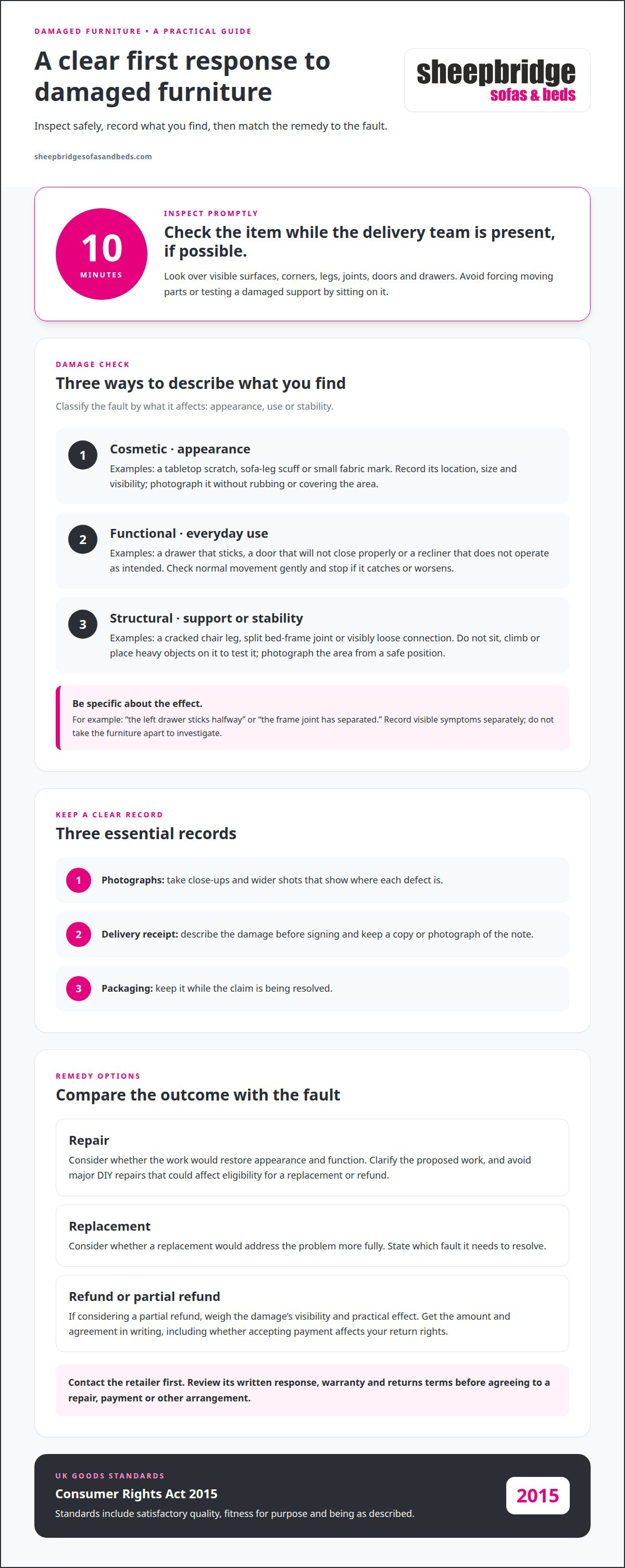
Ask whether a repair would restore the item’s appearance and function, or whether replacement would address the problem more fully. A loose fitting may be straightforward to repair, while a cracked load-bearing part may need a different solution. Check the warranty and returns terms before agreeing. Avoid major DIY repairs, which could affect eligibility for a replacement or refund.
- Compare the proposed remedy with the fault’s lasting impact. Consider whether the furniture will still work as intended, whether a repair would leave visible damage, and whether a replacement would resolve the issue. Explain your preference clearly to the retailer. For example, say why a repaired table leg would not meet your needs if it remains unstable after the work.
-
Consider a Partial Refund
Consider a partial refund only if you’re willing to keep the furniture in its damaged condition. Ask the retailer to put the amount and agreement in writing, including whether accepting payment affects your return rights. Weigh the offer against the damage’s visibility and practical effect. A written record helps prevent later disagreement about what you accepted or which remedy remains available.
- Make your decision after reviewing the retailer’s written response, warranty and return policy. Don’t accept payment or a repair arrangement without understanding its terms. If you prefer a replacement, state which fault it must resolve. If you choose repair, clarify the proposed work. If you want a refund, say so directly and keep copies of your messages and the agreed outcome.
Cosmetic, functional and structural damage: what is the difference?
Classify each fault by what it affects: appearance, use or stability. This distinction helps you describe the damage and assess its practical impact.
-
Identify Cosmetic Damage
Look for surface changes, such as a scratch on a tabletop, a scuff on a sofa leg or a small fabric mark. These may affect appearance without changing how the item works. Note each mark’s location, size and visibility. Check the furniture in ordinary room lighting, then take a clear photograph without rubbing or covering the affected area.
Compare the damage with nearby surfaces. A shallow mark on the back of a chest may be less visible than a scratch across its front. Don’t assume a fault is only cosmetic because the furniture still works. A crack, split or lifted edge may extend below the surface, so record what you can see without probing it.
-
Identify Functional and Structural Damage
Test normal functions gently, without forcing a stiff or misaligned part. Check whether a drawer moves smoothly, a door closes properly or a recliner operates as intended. Stop if movement catches, makes an unusual sound or seems to worsen the fault. Record the affected feature and what happens during ordinary use.
Look for damage to parts that support weight or hold the item together, such as a cracked chair leg, split bed-frame joint or visibly loose connection. These signs may affect stability. Don’t sit, climb or place heavy objects on the furniture to test it. Photograph the joint or support from a safe position instead.
- Describe both the appearance of the fault and its effect. A split drawer front could be cosmetic if it remains secure, but functional if it prevents the drawer opening. A crack in a supporting rail may be structural even if it is hard to see. Be specific: write “the left drawer sticks halfway” or “the frame joint has separated,” rather than simply “damaged”.
Check whether several signs point to the same underlying problem. A table that rocks and has a visibly separated joint needs more caution than one with a surface scuff. Don’t take the furniture apart to investigate. Record each visible symptom separately, including the panel, leg, hinge or fitting involved.
- Use the category to explain why the fault matters, not to minimise it. A mark can affect the finish you expected, a jammed drawer can limit everyday use, and a compromised support can affect stability. Share factual observations with the retailer, linking each photograph to the relevant part of the item.
Inspecting furniture and deciding whether to refuse delivery
Contact the retailer first, even if delivery staff caused the damage, because the purchase is with the retailer. Agree return arrangements and responsibility for costs before collection.
-
Inspect the Furniture
Inspect the item during the first 10 minutes, while the delivery team is present if possible. Check visible surfaces, corners, legs, joints, doors and drawers. Look for tears in upholstery, cracked panels, loose fittings or uneven frames. Don’t force moving parts or test a damaged support by sitting on it. Compare matching pieces if your order includes a set.
-
Record Damage Before Departure
Photograph each mark or fault before the delivery team leaves. Take close-ups and wider shots showing where each defect is. Describe the damage on the delivery receipt before signing, then keep a copy or photograph of the note. If space is limited, write a concise description such as “cracked left leg” and make a fuller record separately.
-
Decide Whether to Refuse Delivery
Refuse the item if damage affects its stability or makes it unsafe to use. Tell the delivery team what you found, record the reason and notify the retailer promptly. For a minor surface mark, you may prefer to accept the item while clearly recording the fault. Don’t let pressure to arrange a quick repair lead you to accept damage you haven’t documented.
-
Determine Responsibility and Return Costs
Report the problem to the retailer, even if you believe the delivery company caused it. The retailer is the practical first contact because it sold you the furniture. Ask for written confirmation of who will arrange collection and cover return delivery costs. Keep the response with your receipt and photographs.
- Read the delivery terms, returns policy and warranty promptly. Some retailers require damage reports within 24 to 48 hours, even when their general return window lasts longer. Report the fault as soon as you spot it, and follow the retailer’s stated process. Keep the date, method and details of your report for your records.
- Prepare the room before a future delivery to reduce avoidable knocks. Clear the route from the entrance to the intended space, move loose rugs, and protect nearby walls or doorframes. Measure narrow turns and doorways against the furniture dimensions. Tell the delivery team about access problems before they carry the item inside.
Keeping records and escalating unresolved complaints
Build a clear record of the damage, your contact with the retailer and the remedy discussed. An organised claim makes it easier to explain what happened and identify unanswered questions.
-
Keep Records of the Claim
Create a folder for the order confirmation, receipt, delivery paperwork, photographs and retailer messages. Keep the packaging until the claim is resolved, since some retailers require it. Save the original files and label copies clearly, such as “drawer-front-mark” or “delivery-receipt”. This gives each piece of evidence a clear purpose.
Record when you reported the damage, how you contacted the retailer and any reference number provided. Note the name or role of anyone you spoke with, along with the remedy discussed. For example, write “replacement requested; retailer replied by email” rather than relying on memory.
- Make a simple timeline connecting each event to its evidence. Put the delivery date first, followed by your report and the retailer’s response. Match each photograph to a brief description, such as “right-side panel, close view”. If you later notice another fault, add a separate dated entry instead of changing your earlier account.
- Keep everything together, including packaging labels and written delivery notes. Don’t discard a damaged component or alter the furniture while the retailer considers the claim. If collection is arranged, photograph the item and its protective packaging beforehand. Keep the collection confirmation with the original delivery record.
-
Escalate an Unresolved Complaint
Send the retailer a written complaint if earlier messages haven’t resolved the issue. Include the order reference, a concise description of the fault, the remedy you want and copies of relevant evidence. For example, explain that a drawer remains unusable and attach a photograph of the affected runner.
Keep the wording factual and identify what remains unresolved. If the retailer offered a repair but you requested a replacement, explain why the response doesn’t address your concern. Ask for a written reply and save it with your timeline.
- Compare the retailer’s response with your original request and the evidence you sent. If it proposes a different remedy, note what changes, who will arrange the next step and any stated conditions. Reply in writing if a detail is unclear or incorrect. Keep the full email thread, not just the latest message.
- Update your claim file until the agreed remedy is complete. Add collection records, repair arrangements, replacement delivery details or refund correspondence as they arrive. If the issue remains open, refer to the dates and messages already recorded. A consistent timeline helps you explain the case without piecing together scattered notes.
Inspecting furniture without worsening the damage
Inspect gently and avoid handling the furniture more than necessary. Photographs and a precise description are more useful than a quick fix that changes the damaged area.
- Start with a visual check in good light. Photograph the damaged part close up, then take a wider image showing its position on the furniture. For a scratch on a table, capture both the mark and the full tabletop. Avoid rubbing, polishing or pressing the area, as this can change its appearance.
- Keep your hands away from cracks, splits and loose joints. Don’t push a separated panel into place or tighten a fitting with a screwdriver. This may widen a crack, shift the parts or leave fresh tool marks. Photograph the joint as it is and describe which parts appear separated.
- Check moving parts only through their ordinary, gentle movement. If a drawer starts to catch, stop rather than pulling harder. If a door rubs against its frame, don’t bend the hinge or loosen its screws. Note what happened, where movement stopped and whether the part moved freely before meeting resistance.
- Don’t test a suspect support by putting weight on it. A cracked chair leg or bed-frame rail could become more damaged under pressure. Leave the item unused if it appears unstable, and photograph it without lifting, sitting on or moving it. Keep children and pets away from the affected area.
- Leave chips, cracks and torn upholstery untreated while the retailer considers your report. Wood glue, filler, paint, adhesive patches and fabric repairs can change the fault and its appearance. Don’t sand a rough edge or pull loose threads. Record the original condition, then follow the retailer’s instructions about any proposed repair.
- Keep the item and its parts as they are. Don’t dismantle furniture to inspect hidden surfaces or discard a damaged component. If packaging must be moved, handle the furniture separately and avoid dragging it across the floor. Keep protective materials available in case the item needs to be collected.
- Send the retailer clear images and a short factual description. For example, write, “The right rear joint is separated; I haven’t moved or repaired it.” This helps distinguish the delivered fault from any later handling. If you’re choosing new seating after resolving a claim, explore sofa options that suit your room and needs.
Sheepbridge Sofas & Beds: Manual Recliner Sofas
Sheepbridge Sofas & Beds offers Manual Recliner Sofas for shoppers choosing seating after resolving a damaged-furniture claim. Consider the space available, how you use your living room and whether a manual recliner suits your routine. For a larger seating arrangement, compare Corner Sofas; Fabric Sofa Suites are another option for furnishing a room.
Take the same careful approach to a new purchase: review the product details, inspect the furniture on delivery and record any damage before deciding on a remedy. If you’re comparing seating styles, explore the sofa options available at Sheepbridge Sofas & Beds to find a fit for your home.
Visit Sheepbridge Sofas & Beds to explore the range.
Move forward with confidence
Once your damaged-furniture claim is moving towards a resolution, take time to consider what you need from your next purchase. Think about how the room is used, the space available and which features would make everyday life more comfortable. Planning can help you choose furniture that suits your home instead of making a rushed decision while resolving a problem.
Knowing what to do if new furniture arrives damaged can also help you prepare for your next delivery. Keep your order details accessible, make room for a careful inspection and record any concern as soon as you notice it. Clear steps help you stay in control and communicate your expectations from the outset.
If you’re ready to explore seating options for your home, contact Sheepbridge Sofas & Beds. Take the next step at your own pace, with a clearer idea of what will work for you.
Frequently Asked Questions
Which resolution may suit the damage?
Choose a remedy based on what the fault affects and the outcome you need. A small finish blemish that doesn’t affect use could support a discussion about keeping the item for a partial refund. A jammed drawer or damaged mechanism may call for repair or replacement. A split support or unstable frame requires particular caution. Explain the fault’s effect, not just its appearance, when stating your preference.
What should I do immediately if new furniture arrives damaged in the UK?
Pause before assembly or use, then tell the retailer about the damage promptly. If the delivery team is present, note the fault on the receipt and keep a copy. Don’t test a wobbly chair by sitting on it or force a stuck drawer. If you’re unsure what to do if new furniture arrives damaged, preserve its condition and make a clear written report.
How should I photograph and document damaged furniture for a claim?
Take a close photograph of each fault and a wider image showing its position on the item. Photograph labels or packaging details that help identify the order, without removing anything needed for the claim. Add a brief description, such as “split on the right side panel”. Keep the original image files and note when you took them, so your record distinguishes the delivered condition from later changes.
What are my rights under the Consumer Rights Act 2015 if furniture arrives damaged?
The Consumer Rights Act 2015 sets standards for goods in the UK, including satisfactory quality, fitness for purpose and being as described, according to The National Archives (legislation.gov.uk). A fault present on delivery can be relevant when assessing whether those standards are met. Keep your description factual: explain what was damaged, how it affects the furniture, and how the item differs from what you ordered.
How long do I have to report damaged furniture to the retailer?
Report damage as soon as you discover it, because seller reporting requirements can differ. Some furniture retailers require a report within 24 to 48 hours, even if their general returns period is longer. Check the order paperwork for the seller’s damage-reporting process and keep a dated copy of your message. Prompt reporting is especially useful if damage only becomes visible during careful unpacking.
Can I reject damaged furniture and get a full refund in the UK?
You can tell the retailer you’re rejecting furniture that arrived damaged and request a refund. Whether a full refund is appropriate depends on the circumstances, the fault and the stage of your complaint. State clearly that you’re rejecting the item, explain the damage and ask the retailer to confirm the proposed refund and collection arrangements in writing before the item is returned.
Can I ask for a replacement or repair instead of a refund for damaged furniture?
Yes. Tell the retailer which outcome you prefer and explain why it suits the fault. A repair could address a limited defect, while replacement may be more suitable if the damage affects an essential part. Check the warranty and returns terms before agreeing to work. Avoid substantial DIY repairs, which can complicate the retailer’s assessment.
What should I do if the retailer refuses to resolve a damaged furniture complaint?
Send the retailer a formal written complaint explaining what remains unresolved. Include your order reference, the remedy you want and evidence supporting your account. Ask for the retailer’s position in writing and keep its reply with your complaint record. If the response overlooks a photograph or misstates the fault, point to that specific evidence and request a corrected review.