

Signs You Need a New Sofa in NI: 7 Checks to Make in 2026
An old-looking sofa may still have years of comfort left, while a smart-looking one can hide worn support. If you're searching for signs you need a new sofa NI, start with how it feels and functions, not its age or appearance alone.
Sagging cushions or a creak can be concerning, but they don’t automatically mean you need to replace the whole sofa. A loose leg or cushions that need rotating may call for a simple fix; persistent dips, poor support and discomfort are stronger reasons to consider a new one. To avoid replacing a sofa too soon, check whether the problem is limited to a cushion or cover, or whether it keeps affecting how the sofa feels in everyday use.
This guide covers seven practical checks to help you spot structural wear, weigh up a refresh against replacement and decide what to do next. If a new sofa makes sense, compare options such as manual and electric recliners, corner sofas, and fabric or leather suites. Sheepbridge Sofas & Beds is a family-run Newry retailer, with a showroom to view sofas and free delivery and installation across Northern Ireland.
Key Takeaways
- Use these signs you need a new sofa NI checks to judge your sofa by its support and stability, not its age alone.
- Check for sagging and recurring creaks during ordinary use, and stop using any seat that feels unstable.
- Compare simple upkeep, such as plumping cushions, with signs of a deeper structural problem.
- Measure your room and access routes before choosing a sofa that suits your household’s routines and available space.
- Explore manual or electric recliners, corner sofas, and fabric or leather suites online or at Sheepbridge Sofas & Beds’ Newry showroom.
Signs You Need a New Sofa in NI: Start With Comfort, Support and Safety
Replacing a sofa too soon can mean giving up a piece of furniture that still has useful life in it. But if you’re uncomfortable every evening, it’s worth asking whether basic upkeep can solve the problem. The clearest signs you need a new sofa NI are persistent loss of support, an unstable structure or damage that affects everyday use.
Age alone doesn’t settle the question. A sofa’s condition and how it feels during normal use matter more than its age or a tired-looking cover. Notice repeated discomfort, sagging, unusual movement or noises, and damage that keeps returning. These clues don’t all mean replacement is necessary, but together they can show when a closer assessment is needed.
For a visual guide to what to look for when assessing sofa quality, watch this video:
Is discomfort a sign your sofa has had its day?
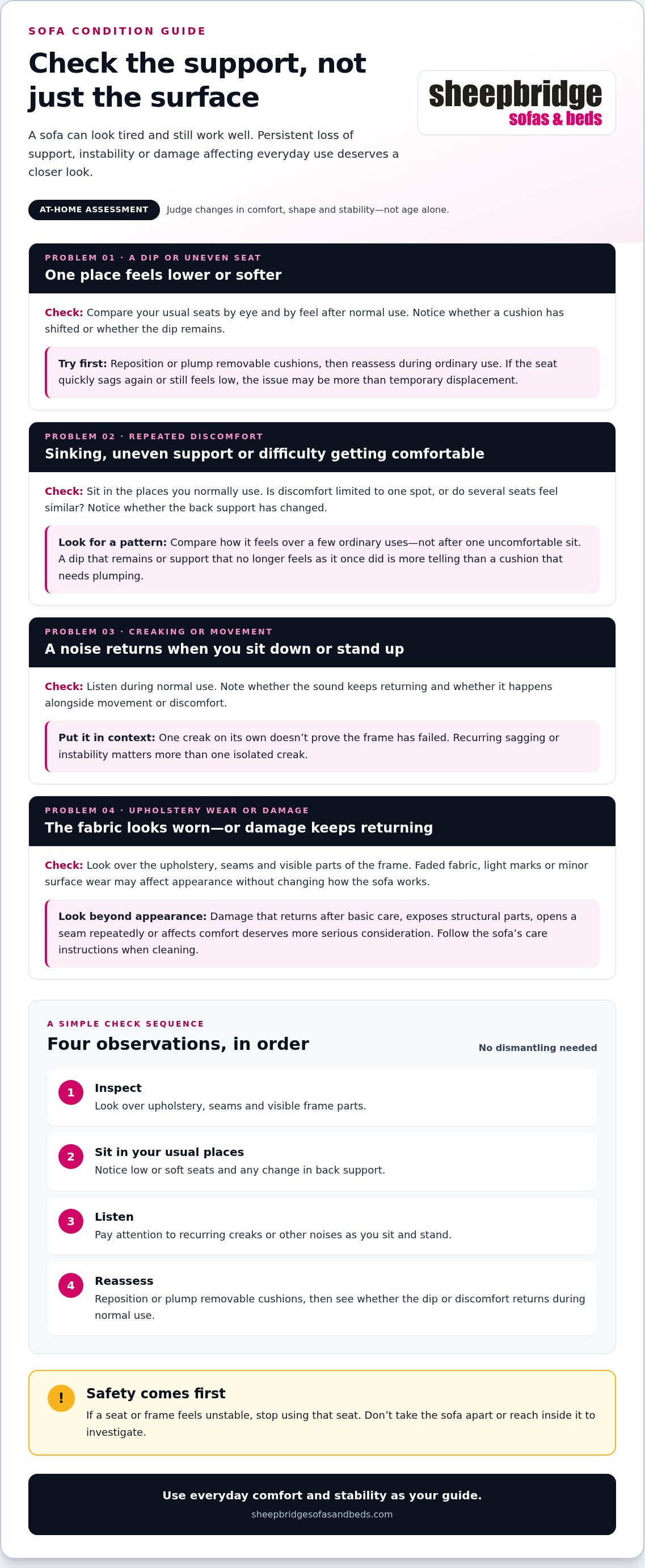
Pay attention to what happens when you sit down and get up. Repeated sinking, uneven seating or difficulty finding a comfortable position may indicate that the support has worn. Try your usual seats and compare them: is the discomfort limited to the spot used most often, or do several seats feel the same? A single cushion that has shifted may just need repositioning. If that seat quickly sags again, the issue may go deeper than the cushion’s position.
Compare how the sofa feels over a few ordinary uses rather than deciding after one uncomfortable sit. A dip that remains or a seat that no longer supports you as it once did is more telling than a cushion that simply needs plumping.
When do wear and damage matter beyond appearance?
A sofa can look tired while its structure remains sound; function and support matter more than appearance alone. If you’re comparing different sofa forms, the Couch overview offers background on sofa terminology and types. Use what you notice at home to guide your next step: cosmetic wear may be manageable, while persistent discomfort or instability deserves more serious consideration.
How to Check Sofa Sagging, Creaks and Upholstery Wear at Home
A careful look and a few ordinary sits can help you distinguish surface wear from a deeper loss of support. Upholstery and filling materials wear in different ways, so there’s no single lifespan that applies to every sofa. Focus on changes in comfort, shape and stability rather than relying on age alone.
Work through this simple sequence:
- Inspect: Look over the upholstery, seams and visible parts of the frame. Don’t dismantle the sofa or reach inside it.
- Sit in your usual places: Notice whether one seat feels lower or softer than the others, or whether the back support has changed.
- Listen: Pay attention to creaks or other noises as you sit down and stand up. Notice whether they happen repeatedly or alongside movement.
- Reassess: Reposition or plump removable cushions, then see whether the dip or discomfort returns during normal use.
If a seat or frame feels unstable, stop using that seat. Don’t try to investigate by taking the sofa apart.
How can you tell if a sofa is sagging or losing support?
Compare the seats by eye and by feel after normal use. A persistent dip, uneven seating or a backrest that no longer supports you comfortably may point to worn support. A cushion that has shifted can often be repositioned or plumped; if it quickly loses shape again, or the seat still feels low, the problem may be more than temporary displacement. These are practical observations, not a technical test.
Do creaking, smells or upholstery damage mean replacement?
A creak on its own doesn’t prove that the frame has failed. Noises can have different causes, so notice whether the sound keeps returning and whether it comes with movement, discomfort or a seat that feels unstable. Recurring sagging or instability matters more than one isolated creak. If the frame feels insecure, avoid using that seat rather than trying to diagnose it from underneath.
Check smells and fabric damage in context, too. An odour that improves after appropriate routine cleaning is different from one that persists despite care. Small marks or faded fabric may be cosmetic, while a tear that exposes filling, a seam that keeps opening or upholstery that catches against you can affect comfort and everyday use. Follow the sofa’s care instructions when cleaning.
For households across Northern Ireland, these checks can make the replacement decision less uncertain. Consider whether the issue is mainly cosmetic or whether it keeps affecting support, comfort or stability. If your assessment points towards replacement, you can browse sofa options from Sheepbridge Sofas & Beds.
Repair, Refresh or Replace Your Sofa? Compare the Signs Before Deciding
A sofa that looks dated doesn’t automatically need replacing, and there’s no set age at which every sofa is finished. Focus instead on what the wear is doing. A surface mark may be manageable, while a persistent dip or unstable frame can affect comfort and safe everyday use. Use this comparison to weigh the signs you need a new sofa NI against the things simple upkeep may address.
| Symptom | Possible simple response | Reason to consider replacement |
|---|---|---|
| Faded fabric or a removable surface mark | Follow the care guidance for the sofa’s fabric or leather; clean only as directed. | Consider replacing if damage keeps returning or makes the sofa uncomfortable to use. |
| Cushions look uneven or out of place | Reposition or plump them as part of routine care. | A dip that quickly returns may point to persistent loss of support. |
| Recurring sagging or uneven seating | Check whether repositioning changes how the seat feels. | If the seat remains low or uncomfortable, a refresh may not address the underlying problem. |
| Movement, instability or repeated creaking | Don’t dismantle the sofa or keep using a seat that feels unstable. | A compromised frame or continuing instability makes replacement worth considering. |
| Torn upholstery, exposed filling or seams that reopen | Use care guidance suited to the material and assess whether the damage affects use. | Recurring damage that affects comfort or usability can strengthen the case for replacement. |
When might simple sofa upkeep be enough?
When does replacing a sofa become the sensible choice?
Persistent discomfort, sagging that returns after cushions are repositioned, recurring damage or structural instability all give you more reason to consider a replacement. Think about how the sofa serves your household, too. It may no longer suit how you relax or host, or the space available in the room. A dated look or an arbitrary age, on its own, isn’t enough to make the decision.
If replacement seems like the practical next step, compare options that fit your needs, such as a manual or electric recliner, a corner sofa, or a fabric or leather suite. The Newry sofa buying guide can help you explore styles before deciding.
Choose a Replacement Sofa That Fits Your Home and Everyday Use
Once you’ve decided your current sofa no longer works for you, choose its replacement around the room and how your household uses it. Measure the space available, including the area needed to move around the sofa, and check the route from the entrance to the room. Doorways, hallways and tight turns can affect whether a sofa can be brought into place, so measure these before you choose a size or style.
Which sofa style suits your room and routine?
A corner sofa can make good use of a room layout and provide shared seating, but it may take up too much floor space if it narrows walkways. A more compact arrangement may suit a smaller room or leave greater flexibility for other furniture. Think about how many people usually sit together, whether you host guests and whether the sofa is mainly for relaxing or everyday family use.
If you enjoy putting your feet up, a manual recliner offers a reclining seat; electric power recliners are another option. Consider where the sofa will sit and how its reclining function fits the room. Leave enough space for comfortable movement around the seating, and account for your household’s routines before settling on a format.
What should you check before buying a new sofa in NI?
Use this checklist to compare choices with your home in mind:
- Room and access: Measure the intended space and the route through the property, including narrow doorways and turns.
- Seating and layout: Decide how many people need a seat, whether a corner design suits the room, and which walkways must stay clear.
- Upholstery: Compare fabric and leather for their feel, appearance and care needs. Neither is the right choice for every household, so consider how you use the sofa and the upkeep you’re comfortable with.
- Comfort: Try the seat and back support, and consider whether a reclining option would suit your regular routine.
Photos and measurements can narrow the options, but sitting on a sofa in person may help you judge its feel and scale. Sheepbridge Sofas & Beds has a Newry showroom where you can view sofas, as well as an online store. For more on comparing local shopping options, read this guide to local furniture shopping advice.
Ready to compare styles for your home? Browse sofas at Sheepbridge Sofas & Beds.
Replacing Your Sofa in Northern Ireland: Make the Next Step Simple
Once you’ve assessed comfort and structure, the decision can be straightforward: try basic upkeep where it’s suitable, then compare replacements if support, stability or everyday comfort remain a problem. The signs you need a new sofa NI aren’t just about wear. A sofa that no longer fits your room or the way your household uses it may also be worth replacing.
How can Newry shoppers make choosing a replacement easier?
Bring your room measurements and a clear idea of who uses the sofa and what for. Are you choosing a seat for quiet evenings, family use or having guests over? Knowing your priorities makes it easier to compare manual recliners, electric recliners, corner sofas, and fabric or leather suites.
Trying a sofa in person can help you judge its seat feel and scale more confidently than looking at photos alone. Sheepbridge Sofas & Beds is a family-run retailer based in Newry, with a showroom to visit and an online store to browse at home.
What should you do once you decide it is time for a new sofa?
Use this checklist to keep your choice grounded in practical needs:
- Preferred style: Choose a sofa format that suits how you relax, sit together or host.
- Room fit: Recheck the space available, walkways and access route into the room.
- Upholstery: Compare fabric and leather for the look, feel and care routine you prefer.
- Comfort: Think about the seat and back support, and whether you’d value a reclining seat.
- Delivery: Consider how the sofa will get into your home and the practicalities of installation.
Sheepbridge Sofas & Beds provides free delivery and installation across Northern Ireland, with delivery as far as Dublin. After choosing a sofa, local shoppers can browse online or visit the Newry showroom to view options in person.
Take your measurements, keep your household’s needs in mind and compare at your own pace. Explore sofas at Sheepbridge Sofas & Beds and find an option that feels right for your home.
Make Your Next Sofa Decision With Confidence
The clearest signs you need a new sofa NI are lasting discomfort, recurring sagging or an unstable frame, not simply a dated look or a certain age. Try straightforward upkeep when the issue is limited to surface care or cushions that need repositioning. If support still feels poor, compare replacements that suit your room, comfort preferences and everyday routine.
Sheepbridge Sofas & Beds is a family-run Newry retailer, established in 2012. You can browse online or visit the showroom to try sofa options in person. Free delivery and installation are available across Northern Ireland, helping make the next step practical as well as comfortable.
Take your time, use what you’ve learned to compare your options, and choose what works for your home. Explore sofas at Sheepbridge Sofas & Beds and find a comfortable next step with confidence.
Frequently Asked Questions
What are the main signs you need a new sofa?
The clearest signs you need a new sofa are persistent discomfort, sagging that returns after repositioning cushions, reduced support or an unstable frame. Recurring damage that affects everyday use can also be a reason to consider replacement. A faded cover or small mark alone doesn’t necessarily mean the sofa has had its day. Judge it by how it feels and functions, not its appearance or age alone.
How long should a sofa last before you replace it?
There isn’t one reliable lifespan that applies to every sofa. How long it remains comfortable and supportive depends on its construction, materials, care and how heavily it’s used. Instead of replacing it at an arbitrary age, check for lasting dips, loose or unstable parts, and discomfort during normal use. If it still supports your household comfortably and safely, age alone isn’t a reason to replace it.
Can a sagging sofa be fixed, or should it be replaced?
It depends on whether the sag comes from a cushion that has shifted or a deeper loss of support. Try repositioning or plumping the cushions, then see whether the seat quickly dips again during normal use. If the sag persists, seating feels uneven or the frame seems unstable, basic upkeep won’t address the underlying issue. Stop using any seat that feels unstable and consider whether replacement is the sensible next step.
Is a creaking sofa a sign you need a new one?
Not necessarily. One isolated creak doesn’t tell you on its own whether a sofa needs replacing, as noises can have different causes. Notice whether it happens repeatedly and whether it comes with sagging, movement, discomfort or a feeling that the frame is unstable. A recurring noise paired with other changes deserves more attention than a single sound. Don’t dismantle the sofa to investigate; stop using any seat that feels unsafe.
Is it worth replacing a sofa that still looks good?
Yes, if it no longer feels comfortable or supportive, even if the upholstery looks smart. Repeated sinking, poor back support or structural instability can make a sofa unsuitable for everyday use while leaving its appearance largely unchanged. Try simple cushion upkeep if appropriate, then reassess how it feels. A good-looking sofa that remains comfortable and stable may still serve you well, so make the decision on condition and function rather than looks alone.
What should I look for when replacing a sofa in Northern Ireland?
Start with room measurements and access routes, then consider seat count, walkways and how you use the room. Compare fabric and leather by their feel, appearance and care needs, and try the seating if you can. Sheepbridge Sofas & Beds is a family-run retailer in Newry, with a showroom and online store. It offers free delivery and installation across Northern Ireland, with delivery as far as Dublin.
Can cleaning make an old sofa feel new again?
Cleaning can freshen a sofa’s appearance if dirt or a removable surface mark is the main concern, but it can’t restore worn support or stabilise a compromised frame. Follow the care instructions for the sofa’s specific upholstery, as fabric and leather may need different approaches. After cleaning, reassess comfort and condition. If sagging, discomfort or instability remains, a cleaner surface won’t resolve the underlying problem.