

Signs You Need a New Mattress in NI: How to Spot the Problem
What if a dip in your mattress isn’t the only reason you’re waking sore? If you’re looking for the signs you need a new mattress NI sleepers should watch for, remember that discomfort or visible wear is a reason to investigate, not automatic proof that the mattress needs replacing.
Waking less rested can be frustrating, especially when it’s hard to judge sagging or damage. A mattress may be nearing the end of its useful life, but a poorly supported bed base could also affect how it feels. Checking the cause first can help you avoid replacing a mattress unnecessarily.
This guide covers the signs of wear to look for, simple checks to try and when replacement may make sense. You’ll also find practical points for comparing pocket sprung, memory foam and orthopaedic mattresses in Northern Ireland, including how to compare mattress feels at our Newry showroom.
Key Takeaways
- One uncomfortable night doesn’t prove your mattress is worn out; look for persistent changes and lasting damage.
- Use this checklist of signs you need a new mattress NI readers can look for to assess wear without rushing into a replacement.
- Inspect the bed base and mattress surface, and follow the maker’s care instructions before trying to rotate or flip your mattress.
- Compare symptoms with what you find: a base issue may call for a different fix than deep, persistent sagging or damaged materials.
- When replacement makes sense, compare mattress feel, construction, size and bed-base compatibility to find an option that suits you.
Signs You Need a New Mattress in NI: What Changes Should You Notice?
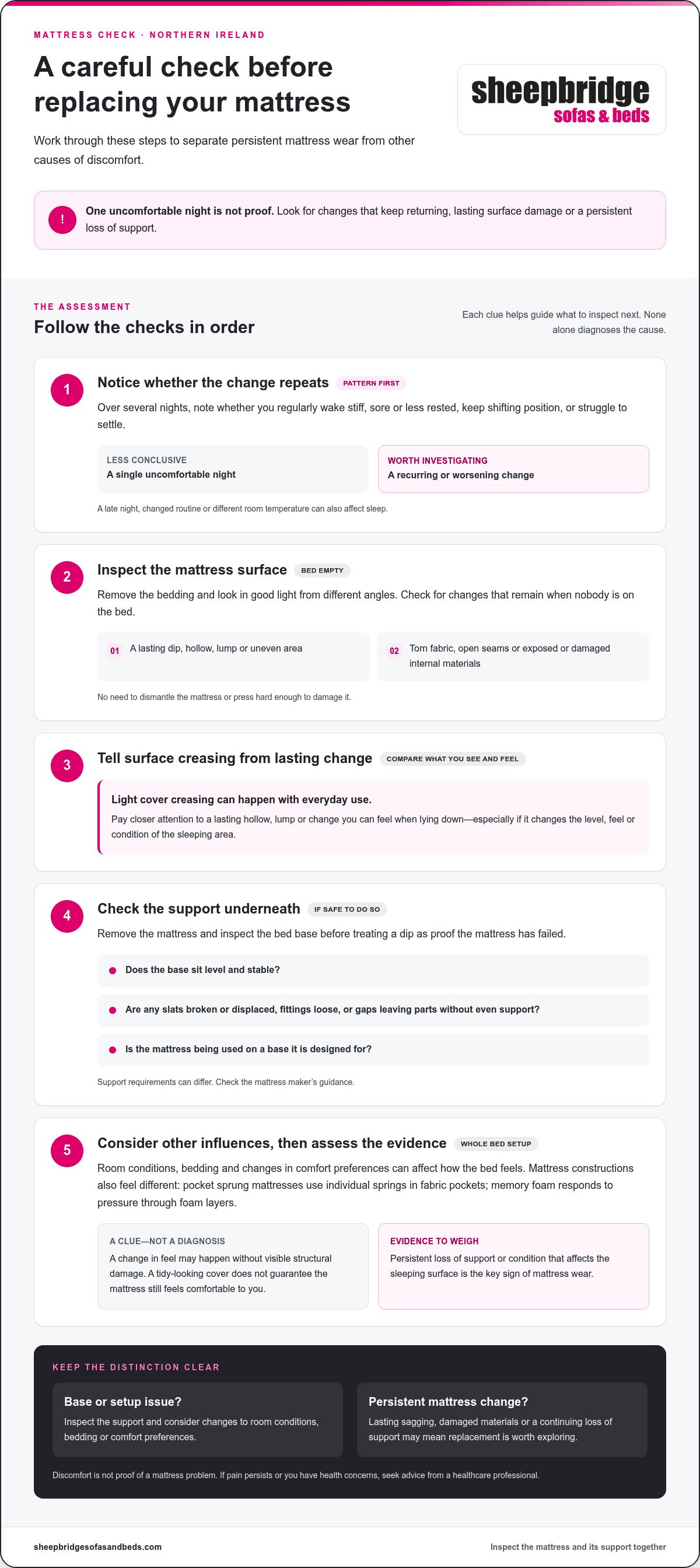
One uncomfortable night doesn’t automatically mean your mattress needs replacing. A late night, a change in routine or a different room temperature can affect your sleep. The signs you need a new mattress NI households should watch for are usually persistent: changes in comfort or visible wear that keep returning, rather than appearing just once.
Use this checklist as a starting point, not a diagnosis:
- Repeated waking discomfort: You regularly wake feeling stiff, sore or less rested than usual.
- Lasting dips or unevenness: The sleeping surface looks or feels lower in one area, even when nobody is on the bed.
- Damaged materials: Fabric is torn, seams are coming apart, or internal materials are exposed or damaged.
- Recurring sleep disruption: You keep shifting position or waking because the surface no longer feels comfortable or supportive.
A mattress is worn when it has a persistent loss of support or condition that affects the sleeping surface. These clues can show you what to inspect next, but they don’t prove the mattress is the cause. Note how often the problem happens and whether it is getting worse.
Which visible mattress changes deserve attention?
Remove the bedding and check the mattress in good light. Look across the surface from different angles for a dip that remains when the bed is empty, an uneven area, torn fabric, open seams or damaged internal materials. You don’t need to dismantle the mattress or press hard enough to damage it. For general background on mattress types and construction, see the Wikipedia article on mattresses.
Light creasing in the cover can happen with everyday use and may not affect comfort. Pay closer attention to a lasting hollow, a lump or a change you can feel when lying down. The important distinction is whether the change is only in the fabric or alters the level, feel or condition of the sleeping area.
When does a change in comfort become a warning sign?
Look for patterns over several nights. If you repeatedly wake uncomfortable in the same place, struggle to settle or feel less rested than before, note when it happens and whether the mattress surface looks different. A new or worsening pattern is more useful than a single symptom, and gives you something concrete to compare as you inspect the bed.
Discomfort can have causes beyond the mattress, so don’t treat it as proof of a particular problem. If pain persists or you have concerns about your health, seek advice from a healthcare professional. Assess the mattress condition separately to decide whether it’s time to explore other options.
Why Mattress Problems Happen: Separate Wear from Other Causes
A mattress can feel different for several reasons. The mattress itself may have changed, but the bed base, room conditions, bedding or a shift in your comfort preferences can also affect how the bed feels. Because these causes can overlap, take a closer look before deciding on a replacement.
Sagging is a lasting uneven area that remains when the bed is unoccupied. A soft impression that disappears once you get up may feel different from a persistent dip, but either is worth assessing alongside the support underneath. The signs you need a new mattress NI shoppers notice make more sense when you consider the whole bed setup, not just the top surface.
Could the bed base be causing the problem?
If you can do so safely, remove the mattress and inspect the base. Check that it sits level and stable, then look for broken or displaced slats, loose fittings or gaps that leave parts of the mattress without even support. A damaged or unsuitable base can change how a mattress feels and may contribute to unevenness. Check the base before treating a dip as proof that the mattress has failed.
Consider whether the mattress is being used on a base it is designed to sit on. Support requirements can differ, so follow the mattress maker’s guidance. If the bed feels uneven in one area, note whether the same area of the base looks damaged or unstable. This can help you distinguish a support issue from a change in the mattress.
How can mattress materials affect comfort over time?
Pocket sprung mattresses have individual springs in fabric pockets, while memory foam mattresses respond to pressure through foam layers. These constructions can feel different, and their surface comfort may change with use. A change in feel doesn’t necessarily mean there is visible structural damage. Equally, a tidy-looking cover doesn’t guarantee the mattress still feels comfortable to you. No single construction is right for everyone.
Room conditions and bedding can also affect whether a mattress feels warmer, cooler, firmer or softer from night to night. Consider whether anything else in your sleep setup has changed before drawing a conclusion. For general guidance on replacement signs and factors that influence mattress wear, the Sleep Foundation's guide on mattress replacement offers useful context. If you’re comparing constructions, this pocket sprung versus memory foam mattress guide explains the differences.
Checking the mattress and its supporting base together gives you a clearer picture of where a problem may be coming from. If you’ve ruled out an obvious base issue and want to compare mattress feels in person, you can explore mattress options at Sheepbridge.
Mattress Troubleshooting: Check the Bed Before Replacing It
Before deciding whether the signs you need a new mattress NI readers notice point to replacement, work through these checks in order. They can help you identify a setup issue, but they can’t restore support if the mattress itself is damaged or worn.
- Clear the bed. Remove bedding, pillows and any topper so you can inspect the mattress itself. This makes the surface and seams easier to see.
- Inspect the surface. Look for lasting dips, lumps, torn fabric, open seams or exposed materials. Run your hand gently over the surface to notice unevenness, but don’t cut, open or forcefully press the mattress. Avoid cleaning products or treatments unless the care instructions allow them.
- Check the base. Look for visible instability, broken or displaced slats, loose fittings and areas where support appears uneven. If it’s safe, check that the base is level and the mattress sits properly on it. A problem underneath may affect how the mattress feels, but correcting the setup doesn’t guarantee the mattress will feel as it did before.
- Note comfort changes. Keep a simple record of when discomfort or disrupted sleep occurs, where you notice it and whether it continues after checking the setup. A recurring pattern gives you more useful information than a single night.
What can you check safely at home?
Read the mattress care label or manufacturer’s instructions before rotating, flipping or cleaning it. Some mattresses are designed to be rotated, while others shouldn’t be flipped. Don’t assume turning the mattress will address a deep dip or damaged materials. If the instructions are missing, avoid actions that could damage it. This is a visual and practical check, not a repair attempt.
When is troubleshooting unlikely to be enough?
If a dip remains when the bed is empty, materials are damaged, or discomfort continues after you’ve checked the base and followed the care instructions, the mattress may have lost support. A topper may change the surface feel, but it can’t be relied on to correct underlying structural damage. Rotation isn’t a guaranteed fix either. Assess the mattress and its supporting base together before deciding whether replacement makes sense.
When comparing replacements, mattress dimensions matter as much as comfort. Measure the mattress and bed base instead of relying on the size name alone. The UK and Northern Ireland bed-size guide can help you check dimensions. For general guidance on comfort preferences, see the Cleveland Clinic advice on choosing a mattress. You can also compare mattress feels in person at the Sheepbridge Newry showroom before deciding.
Deciding to Replace a Mattress or Keep Troubleshooting
Replacing a mattress doesn’t have to be the first response to every complaint. If the surface looks intact but feels uneven, checking the base or reviewing the care instructions is a sensible next step. If several problems keep returning, especially alongside visible damage, replacement may be worth considering.
Use this comparison to weigh what you’ve noticed against what you can inspect. It’s a guide to your next step, not a diagnosis or a promise that a particular adjustment will solve the problem.
| Symptom | What to inspect | Does it persist? | Sensible next step |
|---|---|---|---|
| The bed feels uneven, but the mattress looks intact | Check the base for instability, broken slats or uneven support | Notice whether the uneven feel remains after checking the base | Address an obvious base issue and reassess the mattress in its usual setup |
| The mattress feels different after a care or setup change | Review the care label and any recent changes to bedding or positioning | See whether the change in feel continues once the setup is consistent | Follow the maker’s instructions and avoid adjustments they don’t recommend |
| A dip or lump is visible on the empty bed | Look for a lasting change in the surface or damaged materials | Check whether it remains over time and affects the sleeping area | Consider whether the mattress may have lost support or condition |
| Comfort keeps worsening and materials are damaged | Assess the mattress surface and construction without opening it | Several recurring signs together are more concerning than one uncertain symptom | Consider replacing the mattress rather than relying on a surface adjustment |
Which mattress signs point more strongly towards replacement?
Persistent sagging, visible damage to the mattress construction and repeated loss of comfort carry more weight when they occur together. For example, a lasting dip alongside torn fabric and an ongoing change in how the bed feels gives you more reason to consider replacement than one uncomfortable night. Comfort is personal, and no checklist can guarantee that a new mattress will improve sleep for everyone.
When should another cause be investigated first?
If the mattress looks sound but feels uneven, inspect the base before deciding the mattress is at fault. Consider whether you’ve changed your bedding, sleeping position or bedroom setup, too. These details are useful to note, but they don’t prove what caused the change. Weigh the signs you need a new mattress NI shoppers identify as a pattern, alongside the condition of the whole bed. If you have persistent pain or health concerns, seek advice from an appropriate healthcare professional.
If your checks point towards replacement, compare mattress options in person at the Sheepbridge Newry showroom and explore different feels before choosing.
Choosing a Replacement Mattress in Northern Ireland: Practical Next Steps
Once your checks suggest replacement is worth considering, compare what will fit your bed and feel comfortable to you. There’s no single mattress that suits everyone. Your choice depends on your comfort preferences, the bed base, the mattress dimensions and who’ll be sleeping on it—whether that means an adult mattress or, for parents coordinating an infant sleep setup alongside their bed, dedicated co-sleepers from BabyRace.
What should you compare in a replacement mattress?
Start with construction and feel. Pocket sprung mattresses use individually pocketed springs, while memory foam mattresses use foam layers. These designs can feel different, so focus on the surface feel you prefer rather than relying on a label alone. Orthopaedic mattresses are another category to compare, but the name itself doesn’t guarantee a particular feel or outcome. If possible, try options in person.
Measure your current mattress and bed base so you can compare dimensions accurately. UK and Northern Ireland size names can be easy to mix up, so use the UK and Northern Ireland bed-size guide to check the measurements. Also consider who’ll use the bed and review the manufacturer’s care guidance, including any instructions about the supporting base.
How can Newry shoppers make the next step easier?
Trying mattresses in person lets you compare how different options feel instead of guessing from a description. Sheepbridge Sofas & Beds is an independent, family-run retailer established in 2012, with a showroom in Newry where you can view mattress options. You can also browse online, then use your measurements and comfort preferences to narrow down what you want to explore.
For shoppers across Northern Ireland, delivery arrangements can also be part of the decision. Sheepbridge offers free delivery and installation across Northern Ireland and as far as Dublin. This can simplify planning the move from an old mattress to a new one, while you focus on choosing the right dimensions and feel for your bed.
Use the signs you need a new mattress NI sleepers notice as a prompt to compare options, not a reason to rush. Once you’ve checked the bed base, dimensions and care guidance, you can compare pocket sprung, memory foam and orthopaedic mattresses with a clearer idea of what matters to you. Explore mattresses at Sheepbridge online or visit the Newry showroom to compare feels in person.
Make Your Next Mattress Choice with Confidence
Choosing a mattress doesn’t have to feel rushed. Start by noting what matters most to you, such as the feel you prefer, the size your bed needs and any care guidance you want to follow. That shortlist helps you compare options with purpose, rather than getting distracted by claims that one type is right for everyone.
The signs you need a new mattress NI sleepers notice can point you towards a decision, but your comfort preferences should shape what comes next. Take time to explore suitable options, compare how they feel and choose what works for your bed and household.
Ready to take the next step? Explore mattresses at Sheepbridge Sofas & Beds and find an option that feels right for you. Compare online or visit the Newry showroom to explore mattress feels in person.
Frequently Asked Questions
How do I know if my mattress is causing my back discomfort?
A mattress may be contributing, but discomfort alone can’t confirm the cause. Keep a short note of when it starts, where you feel it and whether it changes after sleeping somewhere else or adjusting your setup. To assess signs you need a new mattress NI, compare that pattern with the mattress’s condition, but don’t use it to diagnose pain. If discomfort persists or concerns you, seek advice from a healthcare professional.
Can a mattress topper fix a sagging mattress?
No, a topper can’t restore the underlying support of a mattress with a lasting dip. It may alter the surface feel of a mattress that is otherwise in good condition, but placing one over a deep hollow leaves the unevenness underneath. Before buying a topper, check whether the mattress and base are level and supportive. If the dip remains, assess the mattress’s overall condition rather than expecting a topper to correct it.
Is it normal for a new mattress to feel different at first?
Yes, a new mattress can feel unfamiliar compared with the one you’ve been sleeping on, especially if its construction or firmness differs. Give yourself time to notice how it feels during your usual routine, rather than assuming the first night tells you everything. Read the care instructions and check that the mattress is correctly positioned on a compatible base. If the feel raises concerns, review the retailer’s or manufacturer’s guidance for that mattress.
Can a bed base make a mattress feel uncomfortable?
Yes, the base affects how a mattress is supported, so damage or an unsuitable setup may change its feel. A loose fitting or broken slat, for example, can create an unstable area even if the mattress surface looks sound. Check the base for visible movement and compare its setup with the mattress maker’s instructions. If the bed still feels uncomfortable after you’ve addressed an obvious issue, assess the mattress separately.
Should I flip or rotate my mattress when it feels uneven?
Only rotate or flip it if the care instructions say that’s suitable for your mattress. Some designs are intended to be used one way up, while others may allow rotation. Check the label or manufacturer guidance first, and follow the stated method rather than turning it at random. Moving a mattress may help distribute use if the maker recommends it, but it won’t reliably correct damage or a lasting loss of support.
Can a damaged mattress affect sleep quality?
It can make it harder to get comfortable. A torn cover, exposed materials, lumps or an uneven surface may cause irritation or repeated position changes during the night. These signs don’t prove that damage is the only reason your sleep is disrupted, since other factors can play a part. Inspect the mattress without opening it, and consider its condition alongside how consistently it affects your comfort. Seek healthcare advice for ongoing health concerns.