

How to Make a Living Room Look More Expensive in Northern Ireland
What if your living room could feel more polished without buying a new sofa or starting from scratch? If the room feels unfinished or cluttered, a costly makeover may seem like the answer. But learning how to make a living room look more expensive NI often starts with making thoughtful use of what you already own and choosing a few changes that work well together.
This guide shares practical ways to create a more cohesive, welcoming space that still suits family life. You’ll find out how to edit clutter, arrange furniture for better balance, and use colour, lighting and texture to give the room a more considered feel. We’ll also look at how sofa size, placement and upholstery affect the overall impression, so you can decide whether to refresh your layout or prioritise an update. Small, well-chosen adjustments can make a room feel more complete without making it formal or replacing everything.
Key Takeaways
- Discover how to make a living room look more expensive NI by starting with a clear plan, not a full-room overhaul.
- Use a considered colour palette and a clear focal point to help existing furniture and accessories feel connected.
- Learn how layered lighting and varied textures can make the room feel warmer and more thoughtfully finished.
- Refresh your sofa with a simple sequence of cleaning, repositioning and carefully chosen finishing touches.
- Use a quick checklist to balance a polished look with comfort and clear pathways for everyday family life.
How to Make a Living Room Look More Expensive: Start with a Clear Plan
A polished living room doesn’t depend on costly purchases. Often, the biggest difference comes from using your existing furniture and accessories with more purpose. If you’re wondering how to make a living room look more expensive NI, start by looking at how you use the room, what already works and which areas feel awkward or unfinished.
Visual clutter isn’t only about owning too many things. It can also come from features competing for attention: busy surfaces, scattered colours or furniture that interrupts the room’s flow. Before making changes, decide how you want the room to feel and what you want people to notice first.
For a helpful introduction to the principles of interior design, watch this video for ideas on creating an elevated look without renovations:
What makes a living room feel polished rather than expensive?
A considered room feels connected. Repeated colours link separate pieces, thoughtful spacing gives furniture room to breathe, and consistent finishes help details sit comfortably together. Architectural elements matter as well; quality woodwork and interior doors from suppliers like Arborfield Joinery can provide an enduring, high-end backdrop that ties a living space together. These choices can make a room feel cared for without relying on luxury brands or high-priced accessories. Keep comfort central, too. A welcoming family room should work for relaxing, conversation and everyday routines, not just look impressive in a photograph.
How to assess your living room before changing anything
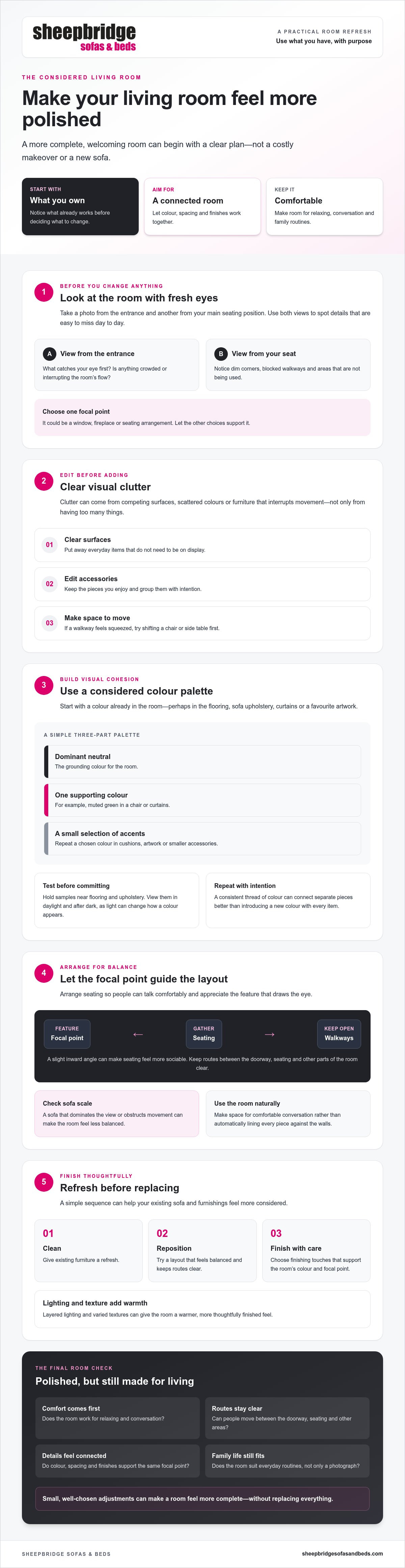
Take a photo from the entrance and another from your main seating position. These views can reveal details that are easy to miss day to day. Look for crowded surfaces, blocked walkways, dim corners and areas that aren’t being used. Then choose one focal point, such as a window, fireplace or seating arrangement, and let the other choices support it. Sofa scale and placement matter: a piece that dominates the view or obstructs movement can make the whole room feel less balanced.
Try this quick check before making changes:
- Clear surfaces: Put away everyday items that don’t need to be on display.
- Edit accessories: Keep the pieces you enjoy and group them with intention.
- Identify one focal point: Decide where you want the eye to settle first.
Take another photo after these simple edits. Comparing the views can help you see what has improved and decide what to tackle next, without rushing into replacing furniture.
Use Colour, Layout, and Focal Points to Give the Room More Cohesion
Once you’ve identified what should stand out, use colour and furniture placement to make the rest of the room feel connected. A restrained palette helps different pieces work together, even if they weren’t bought as a matching set. This is a practical next step in how to make a living room look more expensive NI while keeping the space comfortable and personal.
How to choose a living-room colour palette that feels considered
Begin with colours already in the room. Flooring, sofa upholstery, curtains or a favourite piece of artwork can give you a useful starting point. Build around three parts: a dominant neutral, one supporting colour and a small selection of accents. For example, a neutral wall colour could sit alongside muted green in a chair or curtains, with that green repeated in a cushion or artwork.
Test samples in the room before committing. Hold them near the flooring and upholstery, and view them in daylight and after dark, as light can change how a colour appears. Repeat accent colours selectively across cushions, artwork and smaller accessories. A consistent thread is usually more effective than introducing a new colour with every item. For more on how design choices work together, the BIID explains its role in maintaining professional interior design standards.
How to arrange furniture around a natural focal point
A focal point is the feature that first draws the eye and helps organise the room. It might be a window, fireplace or seating arrangement.
Arrange seating so people can talk comfortably and appreciate that feature, rather than lining every piece against the walls by default. A slight inward angle can create a more sociable feel, while leaving the main routes between the doorway, seating and other parts of the room clear. If a walkway feels squeezed, try shifting a chair or side table before considering a larger change.
In compact Northern Ireland living rooms, flexible layouts and fewer oversized pieces can help preserve openness and comfort. Check that the sofa suits the room’s scale: a large corner sofa may provide generous seating, but it shouldn’t dominate the space or obstruct movement. If you’re considering a sofa change, you can explore sofa shapes and finishes from Sheepbridge Sofas & Beds.
Before settling on a layout, walk through the room as you normally would. Can everyone reach a seat without weaving around furniture? Can you open doors and use the room as intended? Small adjustments to spacing can make the arrangement feel more deliberate without compromising everyday use.
Layer Lighting and Textures for a More Refined Living Room
Lighting and texture can add warmth and depth without filling the room with more accessories. Instead of relying on one bright ceiling light, combine different light sources to suit the activities and features in your living room. A few well-chosen materials, repeated thoughtfully, can make the space feel finished while staying easy to live in.
How to layer living-room lighting for a warmer finish
Ambient lighting provides general illumination, such as a ceiling light that helps you see across the space. Add task lighting where you read, work or do another focused activity, perhaps with a lamp beside a favourite chair. Accent lighting draws attention to a selected feature, such as artwork or a shelf. Together, these layers let you adjust the atmosphere to suit the time of day and what you’re doing.
Several light sources offer more flexibility than relying on one alone.
Use this quick comparison to plan what your room needs:
- Ambient: General illumination for moving around the room. For example, a ceiling light.
- Task: Focused light for reading or working. For example, a lamp beside a chair or desk.
- Accent: Light that highlights a feature. For example, a small lamp near artwork or a display.
Choose bulbs and shades with the room’s use in mind. A reading spot needs useful, directed light, while a softer glow may suit a corner for relaxing. Consider how much daylight the room gets, too. In a room with limited natural light, check that evening lighting reaches darker areas. Where daylight is strong, avoid placing lamps where they create distracting glare.
How to combine textiles and materials without overdoing it
Texture brings interest to a room, but too many competing finishes can make it feel busy. Start with a small mix: woven fabric on cushions, smooth wood on a table and a soft rug underfoot. Repeat a material or colour in a couple of places so the details feel connected rather than scattered. This is a practical part of how to make a living room look more expensive NI without adding unnecessary decoration.
Choose textiles for real life as well as appearance. Curtains should suit the window and the room’s need for privacy; cushions and throws should be comfortable and manageable for everyday use. If your sofa is a simple backdrop, a textured throw or cushions can give it more depth. Keep patterns and finishes in check, then step back and see whether the room feels balanced.
Refresh Existing Furniture and Finish the Room with Deliberate Details
With the room’s palette and layout in place, give existing furniture a tidy, intentional finish before buying anything new. Work through the room in order. This makes it easier to see which changes are already working and where a small update could make the most difference.
- Clean and edit: Freshen upholstery according to its care instructions, then remove items that don’t contribute to the room or serve a useful purpose.
- Reposition: Adjust furniture to improve the balance of the room and keep everyday routes clear.
- Add textiles: Use cushions, a throw or a well-placed rug to introduce softness, colour or texture.
- Style surfaces: Arrange a few useful or meaningful objects, leaving space around them.
How to make an existing sofa look more polished
Start by straightening the upholstery and arranging cushions in a consistent but relaxed way. A throw folded over an arm or draped neatly across one end can add texture and link the sofa to colours elsewhere in the room. A rug can help anchor the seating area, provided its placement suits the furniture and doesn’t create a trip hazard.
Before deciding a sofa needs replacing, consider its scale, condition and position. Does it fit the room without dominating it? Is the upholstery presentable, and is it comfortable for your household? A refresh may be enough if the sofa still works well in the space. If its size or condition is no longer right, compare suitable options rather than choosing a replacement by appearance alone.
Which finishing details make a room feel complete?
Choose details that support the room’s focal point and suit daily use. Hang artwork or a mirror at a considered height, where it feels connected to the furniture beneath it. On a coffee table, group a few useful objects, such as a book and a small tray, but leave clear space for cups and everyday use. That open area is intentional negative space, not something that needs filling.
Greenery can bring life to a room, but choose a plant only if the light, available space and care routine make sense for your home. The same practical test applies to every finishing touch: will you use it, does it fit the room, and can you see it from a main viewpoint?
Prioritise changes by visibility, usefulness and how well they work with what you already own. That’s a simple way to approach how to make a living room look more expensive NI without turning a refresh into a full replacement project. If a different sofa may suit your room better, explore sofa options from Sheepbridge Sofas & Beds.
Make Your Living Room Feel Elevated, Comfortable, and Right for Your Home
A successful refresh should look considered and still feel like home. You don’t need to change everything at once. Make one adjustment, live with it for a while, then decide whether the room needs anything else. That gradual approach helps you focus on what genuinely improves the space.
How to check whether your living-room refresh is working
Take another photo from the same spots you used for your original room pictures. Compare what catches your eye, whether surfaces feel calmer and whether the route through the room is clearer. Check the room in daylight and again in the evening, when your lamps are in use. Most importantly, ask whether it’s still comfortable and practical for the people who use it every day.
Use this final checklist to spot any areas that need a little more attention:
- Cohesion: Do colours and finishes feel connected rather than competing?
- Comfort: Is there a welcoming place to sit and relax?
- Lighting: Can you see comfortably for different activities and times of day?
- Clear pathways: Can people move through the room without furniture getting in the way?
If one answer is no, make that your next small change. Reposition a lamp, edit a surface or shift a chair before buying something new. This steady approach to how to make a living room look more expensive NI keeps the focus on useful improvements, not an unnecessary overhaul.
When might new living-room furniture be worth considering?
Consider replacement if your current sofa no longer feels comfortable, is in poor condition or doesn’t work with the room’s layout. Start with shape and scale: the right-sized sofa should suit the space and leave room to move. Think about colour and finish after you’ve decided what works practically.
If a new sofa would solve a real comfort or layout problem, Sheepbridge Sofas & Beds in Newry offers manual and electric recliner sofas, corner sofas, and fabric and leather suites. Northern Ireland readers comparing options can explore the Sofas Newry buying guide for more help choosing a sofa that suits the room. Otherwise, keep building on what you have, one thoughtful detail at a time.
Start Creating a Living Room That Feels Like You
A more polished living room doesn’t need a complete makeover. Begin with the changes that make the biggest difference: bring colours together, arrange furniture for comfort and clear movement, then use lighting and a few well-chosen details to finish the space. If you’re thinking about how to make a living room look more expensive NI, remember that thoughtful choices matter more than replacing everything.
Try one change at a time and see how the room feels in both daylight and the evening. If your sofa no longer suits your comfort or layout needs, Sheepbridge Sofas & Beds offers manual and electric recliner sofas, corner sofas, and fabric and leather suites. The family-run retailer has been established since 2012, with a Newry showroom and free delivery and installation across Northern Ireland.
Explore the range at Sheepbridge Sofas & Beds sofas if you’re considering a change. Your room can feel more welcoming and considered, one practical step at a time.
Frequently Asked Questions
How can I make my living room look expensive on a small budget?
Start by making the most of what you already own. Clear surfaces, clean upholstery, adjust the furniture layout and choose a few cushions or a throw that tie into the room’s colours. Better spacing and a clear focal point can make the room feel more considered without a major spend. For how to make a living room look more expensive NI, focus first on changes that improve both appearance and everyday use.
What colours make a living room look more expensive?
No single colour guarantees an expensive look. A considered palette is more important: start with a neutral already present in your flooring, curtains or larger furniture, add one supporting colour, then repeat a small number of accents. For example, carry a muted shade from a piece of artwork into a cushion or accessory. Test samples in your room in daylight and evening light before making a lasting change.
Can lighting make a living room look more luxurious?
Yes. Combining general, task and accent lighting makes a living room feel more comfortable and thoughtfully arranged. Use a ceiling light for overall illumination, a lamp beside a reading chair, and a smaller light to draw attention to a feature. Check how the room feels after dark as well as during the day. This layered approach gives you more control than relying on a single bright overhead light.
How do you make a living room look put together?
Repeat a few colours or finishes across the room so separate pieces feel connected. Arrange furniture around a clear focal point, leave space for easy movement and edit accessories that compete for attention. A tidy sofa, a deliberately styled surface and lighting suited to different activities help create a finished feel. Keep comfort in mind, too. A room looks most successful when it works for the people who use it.
What should I remove to make my living room look less cluttered?
Remove or put away items that don’t serve a purpose, hold meaning or contribute to the room’s look. Start with coffee tables, shelves and windowsills, where everyday objects can easily gather. You don’t need to strip the room bare: group a few accessories together and leave open space around them. Also check for furniture or decorative pieces that block pathways or compete with the feature you want people to notice.
How can I make an old sofa look more stylish?
First, clean it according to its upholstery care guidance and straighten the cushions. Arrange cushions in a coordinated but relaxed way, then add a throw to introduce texture or repeat a colour already used in the room. Consider whether the sofa still suits the space and feels comfortable. If it does, styling may be enough; if its condition, comfort or size no longer works, compare replacement options thoughtfully.
Does a rug make a living room look bigger or more expensive?
A rug can make a room feel more defined and cohesive when it relates well to the seating area. Position it to visually connect the furniture, rather than leaving it isolated in the middle of the floor. Specialist collections from retailers like Attica House illustrate how designer rugs can anchor a layout and tie complementary tones together. In a smaller room, a rug that suits the space can help the layout feel intentional, while one that’s too small may look disconnected. Consider the room’s proportions and how people move through it before choosing placement.