

How to Clean a Fabric Sofa: The Expert Guide for Northern Ireland Homes
It is a wet Saturday afternoon in Newry, and your little one has just dropped a bowl of tomato soup right onto your stunning new fabric suite. That sinking feeling is something we hear about all the time at Sheepbridge Sofas & Beds, our family-run showroom. Learning how to clean fabric sofa upholstery doesn't have to be a gamble with your furniture's life. We know you want your home to stay looking luxury and smelling fresh, even when the damp Northern Ireland weather or the family dog tries its best to ruin the mood.
You aren't alone in feeling baffled by manufacturer cleaning tags or fearing that a quick scrub might lead to permanent discolouration. According to a 2023 study on British living habits, the average person spends roughly 17 years of their life sitting on their settee, so keeping it in top condition is a high priority for most households. We promise to help you master the art of sofa maintenance with our expert steps to remove stains and refresh your fabric suite safely. We will show you how to decode care labels and share the exact techniques to extend the life of your furniture so it stays as comfortable as the day it arrived.
Key Takeaways
- Learn how to decode universal care labels to ensure you use the correct cleaning method for your specific sofa fabric.
- Master our expert 5-step process on how to clean fabric sofa surfaces safely, including the essential "dry-first" rule to prevent deep-set grime.
- Discover how to use everyday household staples like white vinegar and baking soda to neutralise stubborn odours and common household stains.
- Get practical advice for maintaining your suite during the damp Northern Ireland winter, from preventing musty smells to managing even wear.
- Identify the clear signs that your fabric has reached the end of its life and when it is time to upgrade to a fresh, durable new piece.
Decoding the Care Label: The First Step for Every NI Sofa Owner
Before you reach for the scrubbing brush, you must find the care label. We’ve seen many beautiful suites in Newry homes ruined because a well-meaning owner skipped this step. Every piece of furniture we sell at Sheepbridge Sofas comes with specific instructions from the manufacturer. These aren't just suggestions; they're the law for your living room. Understanding the different types of upholstery used in modern manufacturing is vital for any DIY cleaning project. Knowing exactly how to clean fabric sofa materials depends entirely on the chemical makeup of the fibres.
You’ll usually find this permanent tag tucked under the seat cushions or stapled to the underside of the main frame. If your sofa has removable covers, check the inner seams. If you ignore these codes, you risk shrinking the fabric, bleeding the dyes, or leaving permanent "water rings" that are impossible to remove. It's the difference between a sofa that looks new for ten years and one that looks worn after six months.
What the Codes Actually Mean for Your Cleaning Kit
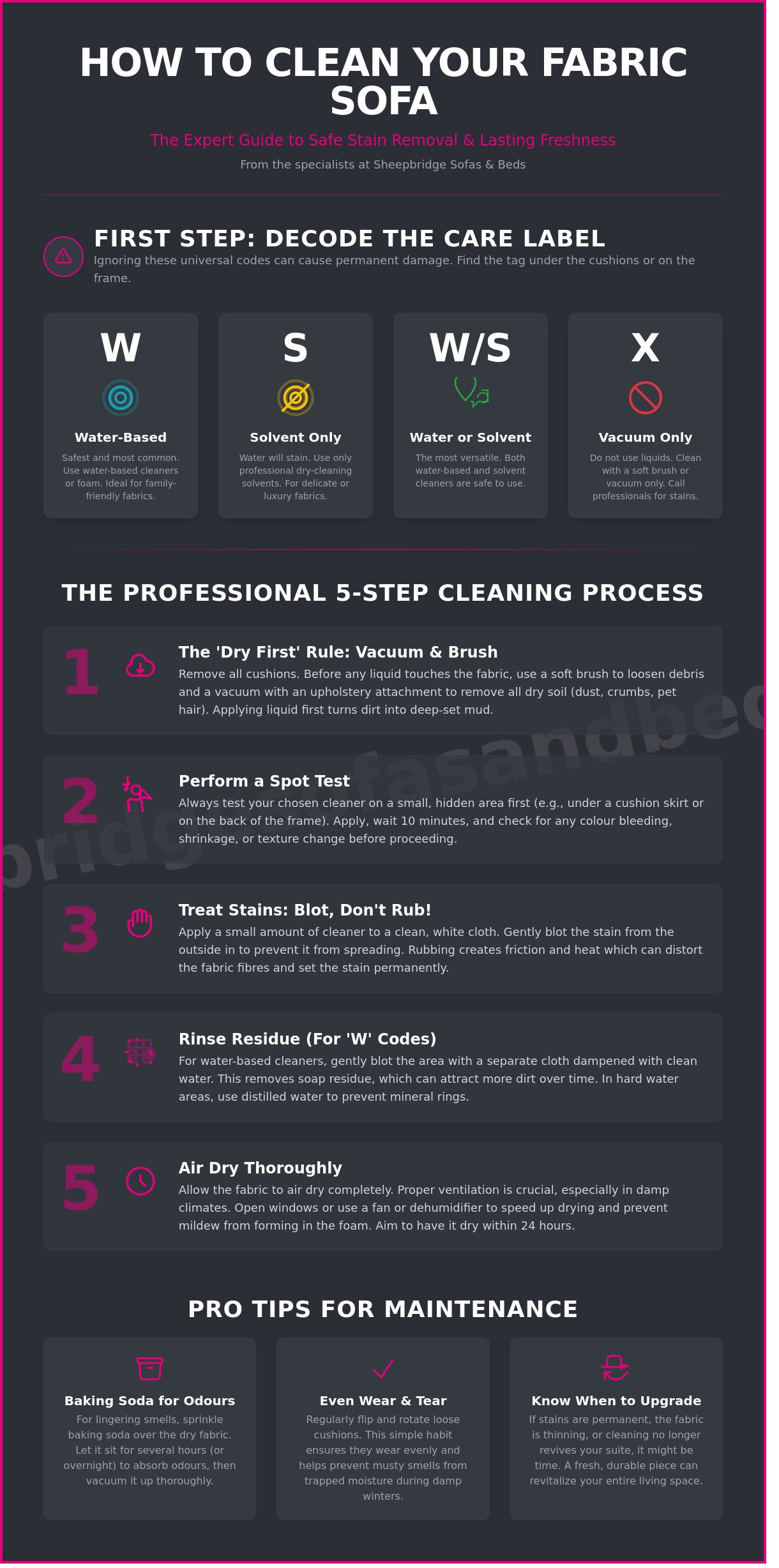
Manufacturers use four universal codes to tell you what's safe. Use this guide to match your label to your cleaning cupboard:
- Code W: This stands for "Water." It's the most common code for family-friendly fabrics. You can use water-based cleaning agents or foam.
- Code S: This means "Solvent." These are often luxury or delicate fabrics. Water will leave a permanent mark on these materials. You must use a professional dry-cleaning solvent.
- Code W/S: You have the best of both worlds. You can use either water-based cleaners or solvents. It's the most versatile option for busy households.
- Code X: This is the "hands-off" category. Only a light vacuum or a soft brush is allowed. If you have a stubborn stain on a Code X fabric, it's time to call in a professional.
Why Northern Ireland Water Matters for Your Sofa
The water coming out of your tap in Newry or Belfast isn't the same as the water in London. According to Northern Ireland Water's 2023 quality reports, the vast majority of our region enjoys soft to moderately soft water. This is generally good news for your furniture. Soft water allows soaps to lather easily, but it also means it's harder to rinse the suds out. If you don't rinse thoroughly, the leftover soap will actually attract more dirt over time.
If you live in a pocket with harder water, such as parts of the Ards Peninsula, be careful. Hard water contains minerals that can leave white, chalky rings on your cushions as they dry. In these areas, we always recommend using distilled water for your cleaning solution. The level of calcium and magnesium in your local supply determines whether you need a teaspoon or a tablespoon of detergent to achieve an effective lather. When figuring out how to clean fabric sofa stains, always start with less soap than you think you need.
The 5-Step Process to Clean Your Fabric Sofa at Home
Learning how to clean fabric sofa sets properly doesn't just keep your living room looking sharp; it protects your investment for years. At Sheepbridge Sofas & Beds, we've seen many beautiful suites succumb to "accidental mud" because owners jumped straight in with wet cloths. Follow our professional 5-step sequence to get it right every time.
First, clear the decks. Remove every loose cushion and bolster. You'll likely discover a "biscuit graveyard" in the crevices, along with loose change or the odd TV remote. Once the surface is clear, follow the "Dry First" rule. About 80% of the soil in a sofa consists of dry particulate matter like dust and skin cells. If you apply liquid to this before removing it, you create a muddy slurry that sinks deep into the fibres. Use a soft-bristled brush to loosen dried debris before reaching for any cleaning solution.
The golden rule is the spot test. Even if a cleaner claims to be universal, apply a small amount to an inconspicuous area, such as the back of the frame or the underside of a valance. Wait ten minutes to ensure there's no colour bleed or texture change. When you move to the actual stain, remember to blot, don't rub. Rubbing generates heat and friction that can permanently distort the fabric's nap. Finally, ensure proper ventilation. In our damp Northern Ireland climate, moisture can linger. Use a dehumidifier or open the windows to ensure the piece dries within 24 hours; this prevents mildew from forming in the internal foam.
Vacuuming the Nooks and Crannies
Your vacuum’s upholstery tool is your best friend. For those with corner sofas Newry families use daily, pay extra attention to the "V" where the sections join. If you have a manual or electric recliner, check the metal mechanisms. Debris trapped in the gears can cause grinding or motor failure over time. For pet owners, a standard vacuum often misses stubborn hairs. Use a damp rubber glove or a specialised lint tool to "rake" the fabric before your final pass.
Spot Cleaning Stubborn Stains
Tea, coffee, and red wine are the most common culprits in Newry households. Use the "outside-in" blotting method, starting at the edge of the spill and moving toward the centre. This prevents the liquid from spreading and forming a permanent outer ring. If the fabric is a delicate antique or a high-pile velvet, it's often safer to stop and call a professional. If you feel your current suite is beyond a simple scrub, you can always visit our showroom to see our latest durable collections at Sheepbridge Sofas & Beds.
Natural vs. Shop-Bought: Choosing the Right Sofa Cleaner
Selecting the correct product is the most vital step when you want to learn how to clean fabric sofa surfaces without causing permanent damage. At Sheepbridge Sofas & Beds, we often see customers who've accidentally ruined a luxury suite by using harsh floor cleaners or bleach. These chemicals strip the fire-retardant coatings and weaken the upholstery fibres. Instead, we recommend starting with the "NI Grandmother's remedy." This classic mix of white vinegar and Fairy Liquid handles 85% of common household spills effectively and cheaply.
Natural solutions are fantastic for regular maintenance, but high-traffic family sofas sometimes require more muscle. If your sofa sees daily action from kids and pets, investing in a dedicated upholstery shampoo is a smart move. These products are pH-balanced specifically for furniture fabrics. Professional cleaners across Northern Ireland suggest avoiding anything containing ammonia. This chemical often leaves a lingering scent that's difficult to remove from deep cushions. Stick to reputable brands that specify they're safe for your particular fabric code.
The Baking Soda Refresh Method
You don't always need liquids to get a deep clean. Dry baking soda is a powerhouse for neutralising "wet dog" smells and absorbing body oils from armrests. Sprinkle a generous layer over the fabric and let it sit. You need to wait between 20 and 60 minutes for the powder to draw out the grime. When you're finished, use a soft brush attachment on your vacuum. Empty your vacuum canister halfway through to prevent the fine powder from clogging your HEPA filter. This simple step prevents the 30% drop in suction power that often occurs when vacuuming fine powders.
Mixing Your Own Natural Cleaning Solution
If you prefer a homemade approach, the ratio matters for the best results. Mix 250ml of warm water with 2 tablespoons of white vinegar and 1 teaspoon of mild dish soap. Use a spray bottle to ensure you mist the fabric rather than soaking it. Excessive moisture is the enemy of how to clean fabric sofa materials because it leads to mould growth inside the internal foam. Always perform a spot test on a hidden 5cm area of the back or underside first. Check the patch after 15 minutes to ensure no colour bleeding or texture changes occur before you proceed with the rest of the piece.
Maintenance and Protection: Keeping Your Suite Fresh Year-Round
Maintaining your suite isn't just about the occasional deep clean. It's about building a routine that protects your investment for the long haul. We recommend a 'Flip and Rotate' schedule every 12 weeks. This simple habit ensures your cushions wear evenly and helps you find those hidden crumbs or dust pockets that settle in the gaps. If you're learning how to clean fabric sofa surfaces effectively, consistency is your best friend. Rotating the seat and back cushions prevents permanent dips from forming in your favourite spot.
Living in Newry means dealing with the damp Northern Irish winter. When the heating stays on and the windows stay shut, your upholstery can trap stagnant moisture. This often leads to a musty smell that lingers in the room. You might consider using a fabric protector like Scotchgard. These sprays create a barrier that repels liquids, giving you more time to mop up spills. While they're excellent for stain resistance, keep in mind they can slightly alter the feel of very soft weaves and usually need reapplying every 12 to 24 months. For the best long-term results, we suggest a professional deep clean every 18 months. It's a wise investment to keep the sofas Newry families rely on looking and smelling fresh for a decade or more.
Dealing with Damp and Odours
Humidity levels in Northern Ireland often exceed 80 percent during the colder months. Placing activated charcoal bags inside your sofa frame or running a dehumidifier nearby pulls moisture out of the fabric before it settles. For a natural scent, mix ten drops of lavender or eucalyptus oil with water in a spray bottle for a safe, homemade freshener. Maintaining a small gap between your sofa and the wall allows air to circulate freely, which effectively stops mould and mildew from forming on the back of your furniture.
Daily Habits for a Cleaner Sofa
Speed is everything when it comes to accidents. You have a 60-second window to blot a liquid before it soaks into the internal fibres and becomes a permanent mark. If you're still figuring out how to clean fabric sofa stains, remember that prevention is easier than the cure. Use arm caps or stylish throws to protect high-contact areas like headrests from skin oils and hair products. If you have pets, train them to stay off the main cushions or use a dedicated pet blanket. This simple habit reduces the amount of hair and dander that gets trapped in the weave, making your weekly vacuuming much faster.
Ready to upgrade your living room? Browse our latest collection of durable fabric sofas today.
When to Clean and When to Upgrade at Sheepbridge Sofas
While mastering how to clean fabric sofa cushions is a great skill for any homeowner, sometimes the material is simply too far gone. You should look for specific warning signs that your suite has reached the end of its functional life. If you notice threadbare patches where the weave has worn thin or if the structural foam has started sagging significantly, it's a clear signal that the internal components have failed. A sofa that has lost its shape won't provide the orthopaedic support your back needs, regardless of how clean the surface looks. Sometimes, a specific accident acts as the final straw for an older piece of furniture. While most spills are manageable, oil-based inks or heavy chemical stains can bond permanently with older fibres. Instead of searching for ways on how to clean fabric sofa stains that have deeply penetrated a ten year old suite, a fresh start is often the better value choice. Professional deep restoration and re-padding can often cost upwards of 50 percent of the price of a brand new model, making a replacement the more sensible long term investment for your home.Exploring Easy-Clean Fabric Options
Modern textile technology has completely changed the way we think about living room furniture. We now stock an extensive range of performance fabrics that actually repel liquids on contact, allowing spills to bead up rather than soak in. For busy families across Northern Ireland, we recommend choosing darker colours or textured weaves. These designs are far more forgiving than flat, pale fabrics and hide the general dust of a hectic household. You can visit our Newry showroom to feel the durability of these latest collections for yourself. Our local experts will guide you toward low-maintenance options that stay looking new for years.The Sheepbridge Advantage: Local Service and Delivery
Refresh Your Living Space with Expert Care
Maintaining a beautiful home in Northern Ireland shouldn't be a struggle. You've now mastered how to clean fabric sofa fabrics by decoding care labels and following a professional 5-step process. Remember that choosing between natural vinegar solutions and shop-bought cleaners depends entirely on your specific upholstery type. Consistent vacuuming and prompt spot cleaning are the secrets to keeping any suite fresh year-round.
If your furniture is reaching the end of its life, our Newry showroom team is ready to provide expert advice on the best replacements. We've operated as a family-run local business since 2012, helping thousands of families across the region find the perfect fit. We make the process simple with free delivery across Northern Ireland and Dublin on all our collections. Whether you need a spill-resistant fabric or a classic luxury finish, we'll help you find a piece that stands the test of time.
Browse our durable, easy-clean fabric sofa collections in Newry today!
We look forward to helping you find your next favourite seat in the house.
Frequently Asked Questions
Can I use a steam cleaner on my fabric sofa?
You can use a steam cleaner on most fabric sofas, provided the care label displays a 'W' or 'WS' code. These specific codes indicate the material can safely handle water-based cleaning methods. If you see an 'S' or 'X' on the tag, avoid steam as it could cause permanent shrinkage or water staining. We always recommend testing a small, hidden patch at the back of your suite first to ensure the heat doesn't damage the fibres.
How do I remove a water mark from a fabric sofa?
You can remove water marks by lightly dampening the affected area with distilled water and a clean microfibre cloth. Gently blot from the outside of the ring towards the centre to blend the edges. Using distilled water prevents the mineral buildup found in 100% of tap water samples. This technique is the best way to learn how to clean fabric sofa surfaces without leaving new rings behind.
Is it safe to put sofa cushion covers in the washing machine?
You should only put cushion covers in the washing machine if the manufacturer’s label explicitly states it's safe. Many fabrics shrink by 2% to 5% in a standard 40-degree wash, which makes it impossible to zip them back over the foam inserts. Instead, we suggest professional upholstery cleaning or hand washing in cool water to maintain the shape and integrity of your Sheepbridge furniture.
How can I get rid of the smell of cigarette smoke from my sofa?
The most effective way to neutralise cigarette smoke is by applying an enzyme-based upholstery cleaner or a generous layer of bicarbonate of soda. Smoke particles settle deep into the 10-centimetre thick foam of your cushions. Leave the treatment to sit for at least 24 hours before vacuuming thoroughly. This process breaks down the 4,000 chemicals found in tobacco smoke rather than just masking the scent with artificial perfumes.
What is the best way to remove hair from a fabric suite?
A rubber squeegee is the most efficient tool for pulling pet hair out of fabric fibres. Simply drag the rubber edge across the surface to gather the hair into easy-to-remove clumps. This method is 3 times faster than using a standard vacuum attachment alone. For a quick tidy-up before guests arrive at your Newry home, a sticky lint roller also works well on smaller areas.
How long does a fabric sofa take to dry after a deep clean?
A fabric sofa typically takes between 6 and 12 hours to dry completely after a deep clean. This timeframe depends on the humidity levels in your room and the amount of water used during the process. To speed things up, open your windows or use a floor fan to increase air circulation. Ensuring the room stays at a steady 18 degrees Celsius helps the moisture evaporate more efficiently.
Can I use biological laundry detergent to clean my sofa?
You shouldn't use biological laundry detergent because the enzymes are designed to break down organic matter and can weaken upholstery fibres. These detergents often leave a sticky residue that attracts dirt faster than before. When learning how to clean fabric sofa sets, it's safer to use a dedicated upholstery shampoo or a mild, non-biological liquid. This protects the 10-year lifespan of a high-quality fabric suite.
Does baking soda really remove sofa odours?
Baking soda is an excellent natural deodoriser because it's alkaline, which helps neutralise acidic odour molecules. For the best results, sprinkle a layer over the entire seating area and let it sit for 12 hours. This simple pantry staple is a cost-effective solution for busy households across Northern Ireland. It's safe for 95% of fabric types and won't leave behind any harsh chemical smells.