

Durable Rental Furniture Guide for Northern Ireland
What if the best rental furniture isn’t the most expensive or hardest-wearing option, but the piece that suits how each room will be used? Choosing durable furniture for rental properties Northern Ireland landlords manage means balancing everyday wear with tenant comfort, care needs and the cost of replacing items that no longer work well.
It’s understandable to wonder where durability matters most, or whether practical choices will leave a home feeling bare. This guide offers a realistic furnishing plan, with room-by-room advice on sofas, beds, dining furniture and storage. You’ll learn how to compare materials and styles, plan for routine care and decide where a more durable choice may make sense over time.
Sheepbridge Sofas & Beds is a family-run retailer established in 2012, with furniture for several rooms under one roof. From its Newry showroom and online shop, it serves households across Northern Ireland with free delivery and installation. Read on for practical ways to furnish a rental home that feels welcoming, works hard and stays useful between tenancies.
Key Takeaways
- Choose durable furniture for rental properties Northern Ireland landlords can match to each room’s expected use, rather than assuming every item needs the same level of hard-wearing construction.
- Compare sofas, beds and mattresses, dining furniture, wardrobes and chests of drawers by function, likely wear and care needs before deciding what to buy.
- Look beyond appearance: consider stability, finish, cleaning instructions and how easily larger pieces can be moved between rooms or tenancies.
- Measure room dimensions, doorways and stair access before selecting bulky furniture to avoid a difficult delivery or setup.
- Prioritise essential pieces first, then build a comfortable, practical furnishing plan around the needs of the property and its tenants.
Durable Furniture for Rental Properties in Northern Ireland: What Landlords Need to Consider
Durable rental furniture is chosen to suit the room, the people likely to use it and the level of everyday wear it may face. It isn’t simply the toughest or most expensive option. A dining table for a busy shared house has a different job from a bed in a compact flat, so choose with the property and its expected use in mind.
This guide is about buying furnishings to supply in a let, not hiring furniture temporarily for a move or relocation. Landlords need to consider ownership, ongoing care and how furniture will serve successive tenancies. Tenant turnover can mean more frequent cleaning, moving and condition checks. Shared use may put greater demands on communal sofas and dining chairs, while a smaller household may use those same items differently.
Furniture also needs to work in its setting, from its size and placement to its everyday purpose. A general overview of the history and types of furniture shows how varied furniture can be. For landlords, the useful question is which piece fits the room and routine. No item has a guaranteed lifespan based on its category alone. Construction, care and use all influence wear.
What makes furniture practical for a rental home?
Durability is only one part of practicality. Furniture should be comfortable enough for daily living, straightforward to use and suited to its purpose. In a living room, a sofa should fit the space while leaving room to move around it. In a dining area, the table and chairs should support how tenants will use the room without making it difficult to sit down or move through the space.
Consider likely occupancy and shared use. A family home, for example, may benefit from storage that keeps everyday items organised, while furniture in a shared house may be used by several people throughout the day. Ease of cleaning matters too. Clear care instructions help you understand what routine upkeep a finish or covering needs.
Assess appearance separately from condition. A scuff or faded finish may be visible without affecting how a piece works. Looseness, instability, damage that affects use or a faulty moving part deserves closer attention. The question isn’t simply whether furniture looks new; it’s whether it remains safe, stable and functional for its intended purpose.
Start with the property and likely tenants
Picture who the home is designed for before choosing furnishings. A family home may benefit from comfortable shared spaces and practical storage. A shared house needs common areas that can handle regular use, alongside suitable bedroom furniture. A smaller flat may need compact pieces that leave clear routes through the room. These are starting points, not fixed rules; let the actual layout guide your choices.
Measure the room, then check access. Note doorways, hallways, stairs and tight turns, as well as where furniture will sit once inside. A sofa or wardrobe may fit the floor plan but still be difficult to get through a narrow entrance. Checking dimensions and placement first can prevent awkward compromises later.
Choose furniture for the way the property will be lived in, not for durability in isolation. This use-first approach helps balance comfort, care and long-term value when selecting durable furniture for rental properties Northern Ireland landlords furnish.
How to Compare Furniture Categories for a Northern Ireland Rental
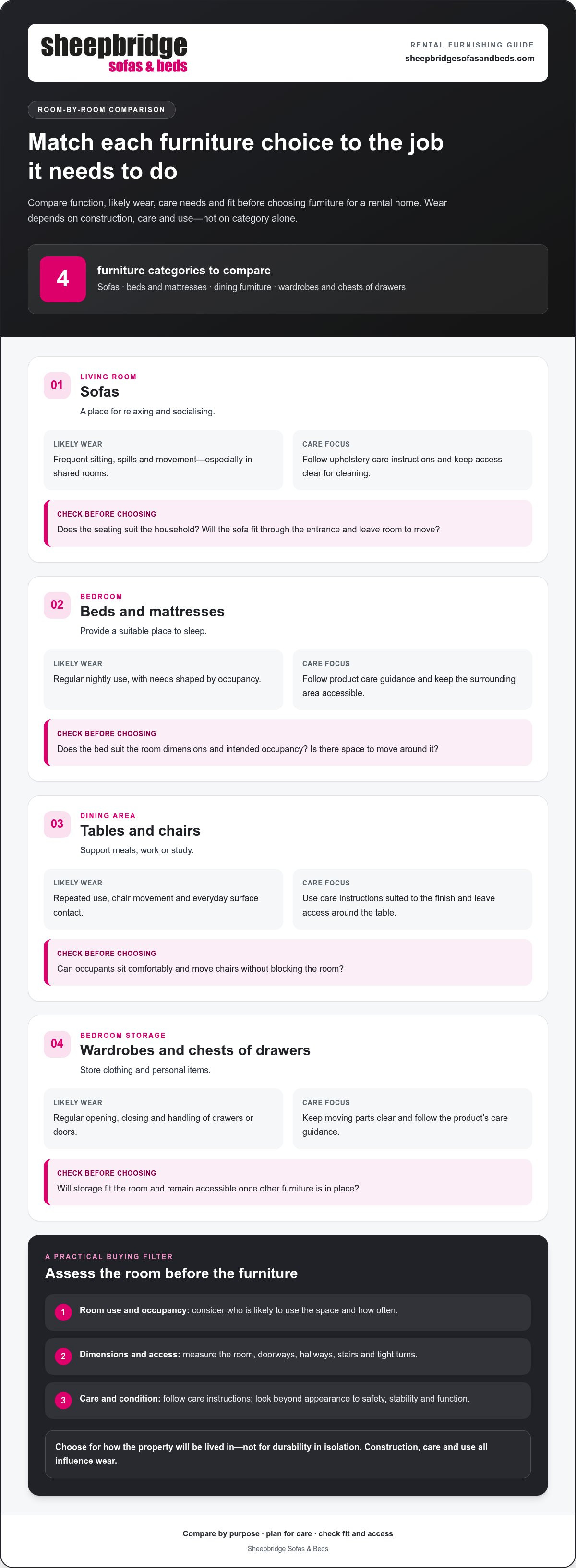
Start a comparison with what each item needs to do, how often it may be used and what routine care it needs. The table offers a starting point for assessing furniture categories before choosing specific pieces. Actual wear depends on construction, care and use, so treat likely wear as a planning prompt rather than a fixed prediction.
| Category | Function | Likely wear | Care needs | Key selection questions |
|---|---|---|---|---|
| Sofas | Seating for relaxing and socialising | Frequent sitting, spills and movement, especially in shared rooms | Follow the care instructions for the upholstery and keep access clear for cleaning | Does seating suit the household? Will the sofa fit through the entrance and leave room to move? |
| Beds and mattresses | Provide a suitable place to sleep | Regular nightly use, with needs shaped by occupancy | Follow product care guidance and keep the surrounding area accessible | Does the bed suit the room dimensions and intended occupancy? Is there space to move around it? |
| Dining tables and chairs | Support meals, work or study | Repeated use, chair movement and everyday surface contact | Use care instructions appropriate to the finish; allow access around the table | Can occupants sit comfortably and move chairs without blocking the room? |
| Wardrobes and chests of drawers | Store clothing and personal items | Regular opening, closing and handling of drawers or doors | Keep moving parts clear and follow the product’s care guidance | Will storage fit the room and remain accessible once other furniture is in place? |
The best furniture category choice depends on room use and occupancy, not on a single durability label. Apply that principle to choose durable furniture for rental properties Northern Ireland landlords can furnish for the people who will live there.
Sofas and living-room furniture for shared use
A single-occupant let may need less seating than a family home or shared living room. Choose seating capacity to suit the likely household, but keep circulation in mind: an oversized sofa can make a compact lounge awkward to use. Consider how the cushions and upholstery will be cared for between tenancies, and check that the sofa can be moved through the property’s access points. For further buying considerations, Sheepbridge’s Northern Ireland sofas buying guide covers sofa choices.
Beds, dining and storage furniture by room
Match the bed and mattress to the bedroom layout and intended occupancy, leaving enough room to get in and out comfortably. Choose a dining set that suits how occupants use the room, whether for meals or everyday tasks, without obstructing access. Wardrobes and chests of drawers should provide useful storage while allowing doors and drawers to open fully. Explore the beds in Northern Ireland buying guide for more on bed categories.
Once you’ve noted each room’s needs, compare sofa, bed, dining and storage options together at Sheepbridge Sofas & Beds, a local source for furnishing multiple rooms.
Which Durability Factors Matter Most When Buying Rental Furniture?
A useful durability check goes beyond appearance. Look at how a piece is put together, whether it feels stable in normal use, how its surfaces can be cared for and whether it suits the room. Compare the information supplied for the specific item with your own observations. General buying advice can guide your questions, but it can’t verify a product’s construction or performance.
Assess construction, stability and everyday function
Start with expected use. A sofa in a shared living room may be used by several occupants throughout the day, while a dining chair may be moved often. Consider who will use each piece and how regularly. Check that furniture sits firmly, joints and connections appear secure, and doors, drawers or other moving parts operate as intended. If an item wobbles, sticks or feels unstable during ordinary handling, that’s a practical concern, not just a cosmetic one.
Look closely at areas likely to receive repeated handling, such as chair edges, drawer fronts and sofa seams. Read the product description and care documents for specific construction details rather than assuming appearance tells the whole story. If a seller gives a test rating or standard, check what it measures and whether it applies to that furniture type and use. Don’t treat an unexplained rating as a promise of how long the item will last.
Stability and function matter particularly in rooms used by several people. A dining table should sit securely during meals, and storage should be straightforward to open and close. Practical checks can help identify problems before furniture is placed in a let, but they don’t replace following the manufacturer’s instructions for assembly and use.
Choose finishes and care routines tenants can manage
Consider the cleaning routine a piece calls for. Read the manufacturer’s care instructions for upholstery, mattresses, furniture finishes and other surfaces, since different materials may need different methods. Choose options whose upkeep makes sense for the property and the people expected to live there. Clear instructions also make it easier to explain everyday care to tenants.
Plan for routine cleaning and prompt attention to spills, using only methods recommended for that item. Don’t assume a finish or covering is stain-proof or can withstand any cleaning product. A surface that’s simple to wipe may be convenient, but the wrong cleaner could still cause damage. Keep instructions with the property information so they’re easy to refer to during a tenancy or changeover.
Easy-care design can simplify routine upkeep, but it isn’t a guarantee against wear. The outcome still depends on use, care and construction.
Check labels and practical access
For upholstered furniture supplied in a rental, the Furniture and Furnishings (Fire) (Safety) Regulations 1988, as amended in 2025, require a permanent, non-detachable manufacturer’s label indicating compliance with applicable fire-safety standards. The 2025 amendments took effect on 30 October 2025 and removed the separate swing-label requirement for new furniture. Keep the permanent label intact and record it for your property files.
Finally, consider whether furniture can be moved into the room and accessed for cleaning. Check the route through entrances, hallways and stairs, and leave enough space to use drawers or move chairs. These details help keep durable furniture for rental properties Northern Ireland landlords choose practical in everyday use.
Plan a Durable Furniture Setup for a Northern Ireland Rental Property
A room-by-room plan helps you furnish a let in a sensible order, rather than buying pieces that don’t suit the space or the people who’ll use it. Keep a written record as you go. It can guide your choices now and make future checks or replacements more consistent.
- Inspect each room. Note its purpose, usable floor space, existing storage and any features that affect furniture placement. Look closely at shared areas, since living rooms and dining spaces may see regular use from several occupants. Record anything that could limit access or placement.
- List essential pieces. Match furniture to each room’s needs before considering decorative extras. A bedroom may need a bed, mattress and clothing storage; a living room may need seating; a dining area may need a table and chairs. The exact list depends on the property and the kind of let you’re preparing.
- Measure the room and access routes. Write down room dimensions and the space available for each item, including clearance for doors, drawers and movement around furniture. Measure doorways, hallways and stair access too. A piece can suit the room on paper but still be difficult to bring into the property.
- Set priorities. Start with essential furniture used every day, then consider optional or decorative pieces once the basics are covered. Within each room, prioritise function and suitable placement. This keeps decisions focused and helps avoid filling a smaller property with items that restrict movement.
- Schedule furnishing and review safety. Plan purchases and delivery around the property’s readiness and intended tenant move-in date, allowing time to place items and check that rooms remain usable. Review current official guidance for any safety requirements relevant to the furniture you’re supplying, including upholstered furnishings.
Create a room-by-room furnishing checklist
Make the checklist specific enough to be useful. For bedrooms, note sleeping and clothing-storage needs. For living areas, record seating requirements; for dining spaces, consider the table and chairs occupants will need. Mark shared rooms as higher-use spaces for planning and routine checks. An inventory can record each item, its room and condition, helping you make consistent decisions about upkeep or replacement later.
Measure, plan delivery and review safety
Keep measurements together in one place, including the intended position of larger pieces and the route from the entrance to each room. This makes it easier to compare furniture dimensions with the property before arranging delivery. Sheepbridge Sofas & Beds is based in Newry and offers free delivery and installation across Northern Ireland. Its Northern Ireland furniture buying guide offers local shopping context.
Ready to plan the key rooms? Browse furniture for your rental property and compare practical options for sofas, beds, dining and storage.
Buy Rental Furniture in Northern Ireland with a Local Retailer
Once you’ve compared furniture by room, use and upkeep, find pieces that fit your plan and the property itself. Sheepbridge Sofas & Beds is a family-run retailer based in Newry, established in 2012. Its home furniture range includes sofas, beds, mattresses, dining furniture and storage, making it a practical local source when you’re furnishing more than one room.
Browse online or visit the Newry showroom to view furniture in person. Seeing pieces up close can help you compare their appearance and consider how they might suit your rooms. Keep your measurements and room-by-room shortlist handy as you browse, so choices stay grounded in the property’s layout and intended use.
Why local delivery and installation can simplify furnishing
Including delivery and installation in your furnishing plan can reduce the practical work involved in setting up a property. Rather than organising how to transport and position every large item yourself, plan around a service that brings furniture into the home and installs it. This can be useful when you’re preparing several rooms or larger pieces need careful placement.
Sheepbridge provides free delivery and installation across Northern Ireland, with delivery also reaching Dublin. Having this regional option can make purchasing simpler for landlords furnishing homes across Northern Ireland, whether the property is in a town or a rural community. Keep delivery arrangements aligned with the property’s readiness and intended move-in date.
A local retailer gives you a place to compare furniture for different rooms as part of one furnishing plan. Consider sofas for living areas, beds and mattresses for bedrooms, dining furniture for shared spaces, and storage for everyday belongings.
Take the next step with Sheepbridge Sofas & Beds
Before browsing, make a shortlist that notes each room, its main use, the essential furniture required and the dimensions available. Add doorway and stair measurements for larger items, plus any care considerations that will help you compare suitable choices. This preparation makes it easier to focus on furniture that fits both the property and your practical priorities.
For landlords planning durable furniture for rental properties Northern Ireland, balancing comfort, room fit and ongoing care is a sensible way to make considered choices. Start with the essentials, then add optional pieces once the key rooms are planned. Sheepbridge Sofas & Beds brings sofas, beds, mattresses, dining and storage furniture together with online shopping, a Newry showroom, and delivery and installation across Northern Ireland.
Browse sofas, beds and home furniture to explore options for your rental, then use your room list and measurements to shape a furnishing plan that feels practical and welcoming.
Make Your Rental Furnishing Plan Work for You
Furnishing a rental is a series of practical decisions, not a race to fill every room. Start by noting what each space needs, keeping measurements close and deciding which items matter most for daily comfort. This makes it easier to compare options calmly and avoid choosing furniture that looks right but doesn’t suit the property.
Think of durable furniture for rental properties Northern Ireland as a balance, not a promise that pieces will never show wear. Choose with the intended use in mind, follow care guidance and keep a record of what you furnish. A thoughtful plan can help create a welcoming home while making future upkeep more straightforward.
Sheepbridge Sofas & Beds is a family-run Newry retailer established in 2012, with online shopping and a showroom where you can view furniture. Free delivery and installation are available across Northern Ireland. Take your shortlist and room measurements as you browse, and build the setup one considered choice at a time.
Browse furniture at Sheepbridge Sofas & Beds and take the next step towards a comfortable, practical rental home.
Frequently Asked Questions
What furniture is best for a rental property?
The best furniture meets the needs of the people and rooms in your property. Start with everyday essentials: beds and mattresses for bedrooms, seating for living areas, a table and chairs for dining, and suitable clothing storage. For a let shared by several occupants, consider how communal rooms will be used and avoid crowding them with pieces that make movement awkward.
How do I choose durable furniture for a rental home?
Choose durable furniture for rental properties Northern Ireland renters can use comfortably by weighing construction, stability and care needs against the room’s purpose. Look for clear manufacturer information, check that moving parts work properly and follow the care guidance for each item. Keep a simple inventory with purchase details and condition notes. That record can help you track changes and make like-for-like decisions if a piece needs replacing.
Is leather or fabric furniture better for a rental property?
Neither is automatically the better choice; the right option depends on the room, household and care routine. Some leather surfaces may be straightforward to wipe, while fabric upholstery may call for vacuuming or specific spot-cleaning methods. Both need care that suits the material. Read the manufacturer’s instructions for the individual sofa and consider whether tenants can follow them easily before deciding which covering better suits the property.
What should landlords look for in a rental-property sofa?
Check that the sofa suits the number of people likely to use the living room, fits the available floor space and can be brought through the property’s access route. Sit on it if viewing in person, and assess comfort, support and stability. If considering a reclining sofa, think about the clearance it needs to operate. For an upholstered sofa supplied with the let, check its permanent fire-safety label.
How can I furnish a rental property on a practical budget?
Furnish in stages, starting with the pieces tenants need for daily living rather than buying decorative extras immediately. Make a room-by-room list, then compare options for fit, function and care requirements. Consider the cost of looking after a piece as well as its purchase price, without assuming that the lowest-priced choice will offer the best value over time. Add optional furniture when the essentials are in place.
Do landlords need to provide furniture in Northern Ireland?
Landlords can choose whether to let a property furnished or unfurnished; the decision often depends on the home and the tenants it is intended to suit. If you supply upholstered furniture, it must meet applicable fire-safety requirements for rental properties. Keep the manufacturer’s permanent label intact and retain a record of it. For a specific legal situation, consult current official Northern Ireland guidance or a qualified adviser.
Can I buy furniture for a rental property from a Newry retailer?
Yes. Sheepbridge Sofas & Beds is a family-run Newry retailer where landlords can browse sofas, beds, mattresses, dining furniture and storage. Shop online or visit the showroom to view furniture in person and compare options for your property. Free delivery and installation are available across Northern Ireland, giving local landlords a convenient way to furnish a let with a retailer based in the region.