

Creating a Relaxing Bedroom Sanctuary in Northern Ireland: A Practical How-to Guide
The quickest way to make your bedroom feel calmer may be to move something, not buy something. Creating a relaxing bedroom sanctuary NI can start with small changes that reduce visual clutter, soften the lighting and make your bedtime routine easier.
If the room feels busy or uncomfortable, it’s easy to assume you need new furniture or a complete redesign. You don’t. A few thoughtful adjustments can help your space feel more restful while making the most of your existing furniture and budget.
This practical guide helps you decide what to change first, based on your room, habits and comfort needs. You’ll learn how to improve movement around furniture, adjust lighting for evening use and make bedding more comfortable. You’ll also find simple ways to reduce everyday clutter and create a routine that helps your bedroom feel like a place to unwind. Start with what’s already there, then make manageable changes at your own pace.
Key Takeaways
- Creating a relaxing bedroom sanctuary NI starts with noticing which sights, sounds and daily hassles make your room feel less restful.
- Sketch your room before moving furniture, including doors, windows, radiators and storage, then check that routes around the bed stay clear.
- Test small lighting and comfort adjustments before considering optional purchases. What feels soothing can vary from person to person.
- Use a simple checklist and an easy reset routine to keep your bedroom comfortable as daylight and seasonal needs change.
Creating a Relaxing Bedroom Sanctuary in Northern Ireland Starts with the Senses
A bedroom sanctuary isn’t about matching furniture or following a particular trend. It’s a personal space that feels comfortable, calm and ready for your usual wind-down routine. Creating a relaxing bedroom sanctuary NI can begin with small, considered adjustments rather than a full makeover.
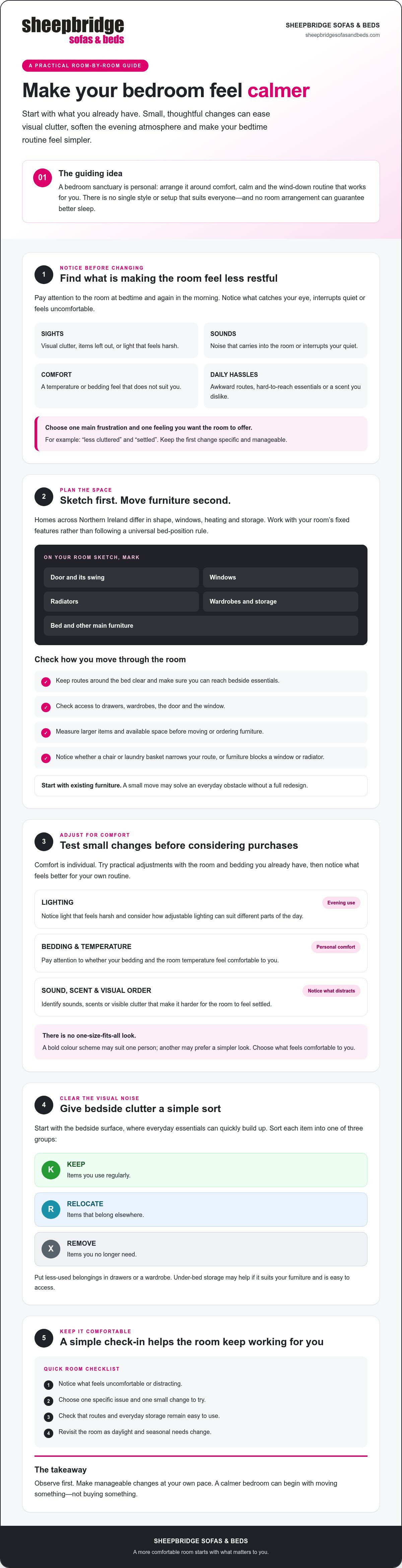
Comfort is individual, and no room setup can guarantee better sleep. Start by noticing what you experience in the room: light that feels harsh, sounds that interrupt your quiet, a temperature that feels uncomfortable, bedding you don’t like, a scent you dislike or clutter that draws your eye. Choose one main frustration and one feeling you’d like the room to offer, such as “less cluttered” and “settled”.
For a visual example of how a bedroom can feel more personal and restful, watch this video:
What makes a bedroom feel restful rather than simply well decorated?
Visual order can make a room feel easier to settle into, while comfortable textures and adjustable lighting help it work for different parts of the day. Practical comfort matters as much as appearance. A bold colour scheme may suit one person, while another prefers a simpler look. There’s no single style everyone finds relaxing.
A bedroom sanctuary is a personal space arranged to support comfort, calm and a regular wind-down routine. This idea fits with the everyday habits and surroundings discussed in guides to good sleep hygiene, without promising a particular sleep outcome.
How to assess the bedroom you already have
Observe your room at bedtime, then again first thing in the morning. Notice where light comes from, what sounds carry into the room, whether the temperature feels comfortable and what catches your attention when you’d rather unwind. Check for awkward routes around the bed or items that make getting ready feel fiddly.
Write a short priority list before buying anything or shifting large furniture. Keep it specific: “move the laundry basket out of sight” is more useful than “make the room nicer”. Pick the issue that bothers you most and one small change to try first. That gives you a clear starting point for the layout and lighting steps ahead.
Plan a Calmer Bedroom Layout for Your Northern Ireland Home
A calmer layout starts with how you use the room, not with a universal rule about where the bed should go. Homes across Northern Ireland vary in shape, window position, heating and built-in storage, so work with the features you have. Before shifting furniture, sketch the room and mark the door, windows, radiators, wardrobes and other fixed features.
Then add your main furniture and check how you move through the space. Aim for a clear route around the bed, easy access to drawers and wardrobes, and enough room to open the door and reach the window. The Sleep Foundation’s overview of the best environment for sleep also considers light, noise and temperature, which can help you plan for comfort as well as appearance.
Arrange the bed and furniture around movement
Try the layout on paper before moving heavy furniture. Consider the direction the door swings, whether you can reach bedside essentials easily and whether furniture blocks a window or radiator. Measure the bed and larger items, then check the available space before moving or ordering anything. The best bed position depends on your room and daily routine, not a fixed design rule. Keeping one side accessible may work better than aiming for symmetry.
Use existing furniture first. Test whether a bedside table can move or whether a chair or laundry basket is narrowing your route. If you’re creating a relaxing bedroom sanctuary NI, small adjustments that remove everyday obstacles are a sensible first step.
Reduce bedroom clutter without losing useful storage
Start with the bedside surface, where everyday essentials can quickly become visual clutter. Sort items into three groups: keep what you use regularly, relocate what belongs elsewhere, and remove what you no longer need. Put less-used belongings in drawers or a wardrobe, and consider under-bed storage if it suits your furniture and is easy to access.
Before replacing a bed or changing furniture, check whether the real issue is storage, size or the route through the room. If a new bed is part of your plan, compare measurements with the Northern Ireland bed-size guide before deciding what will fit. You can also browse bedroom furniture options if you’ve identified a genuine need for a different piece. Make one change at a time, then see whether your everyday routine feels easier.
Make Light, Bedding and Temperature Work Together for Better Comfort
A comfortable bedroom doesn’t depend on expensive decor or replacing everything at once. Try simple adjustments first: change how you use a lamp, alter the bedding layers or move items that block airflow. Give each change time, then notice whether it suits your preferences and routine. Creating a relaxing bedroom sanctuary NI is about finding what works in your own space, not following a one-size-fits-all formula.
Choose bedroom lighting for daytime tasks and evening wind-down
Think about the different jobs your lighting needs to do. Brighter light can help with dressing or reading, while a softer option may feel more comfortable as you wind down. A bedside lamp or dimmable bulb can offer flexibility if you already have one. Adjust curtains or blinds to manage early morning light and privacy according to your preference. Natural daylight varies with the season and the direction your room faces, so review the setup as the year changes. The CDC’s practical guidance to Create a Good Sleep Environment also highlights the value of controlling bedroom light.
Find bedding and mattress comfort that suits you
Consider what feels comfortable to you: the feel of the bedding against your skin, how many layers you prefer and whether you tend to feel too warm or too cool. Your sleeping position and any discomfort you notice may help you describe your preferences, but they aren’t a diagnosis. If you’re considering a mattress change, try suitable options where possible and take time to compare how they feel; exploring specialist retailers such as gigamatrac.hu can also offer a helpful overview of different premium mattress types and support options. Sheepbridge Sofas & Beds offers pocket sprung and memory foam mattresses, and its pocket-sprung and memory-foam mattress guide can help you understand the differences.
Check room comfort as well as bedding. Notice whether the room feels stuffy, unusually warm or cool, or whether you see condensation. You could first make low-effort adjustments, such as reviewing bedding layers or ensuring windows and vents aren’t blocked. If damp, condensation or another building issue persists, seek advice from a suitably qualified professional rather than treating it as a decorating problem.
Keep changes manageable. Try one at a time and note what feels better for reading, dressing and settling in for the night. The right combination may shift with the weather and your routine, so there’s no need to get everything perfect in one go. If a new bed or mattress is a genuine comfort need, you can explore bedroom furniture and mattress options as one possible next step.
A Simple Bedroom Sanctuary Checklist for Northern Ireland Homes
Keep the next steps manageable. You don’t need to redecorate or shop for new furniture to find out what makes your bedroom feel better. Try one change at a time, then review it during your evening routine. This checklist helps you separate quick, no-cost adjustments from purchases that may solve a genuine practical problem.
- Clear one surface: remove bedside items you don’t use regularly and keep essentials within easy reach.
- Improve one light source: test an existing lamp, bulb, curtain or blind before considering a replacement.
- Review comfort: check your bedding layers, room warmth and ventilation, and note what feels uncomfortable.
- Check movement: walk around the bed and make sure drawers and wardrobes are easy to access.
Try a weekend refresh before making bigger changes
Start with the bedside area. Put frequently used items where they’re handy and relocate anything that doesn’t belong there. Try your existing lamps and window coverings at the times you use them, and adjust your bedding before buying alternatives. After rearranging, check that walking routes are clear and windows or vents aren’t blocked. This is a useful first pass, whether you’re in a compact terrace or a larger home elsewhere in Northern Ireland.
Give the changes a short evening trial. Make a brief note of what feels easier or more comfortable and what still bothers you. If a change doesn’t help, undo it. Keep optional purchases, such as a new lamp, bedding or storage, separate from free adjustments so you can decide what’s worth considering within your means. If upgrading your linens is something you decide to explore, advice from King of Cotton can help you compare different cotton varieties to find the right balance of softness and breathability.
Know when a bed or mattress change may help
A room that looks dated may only need a small refresh. A bed or mattress change is more relevant if there’s a persistent issue with comfort, fit or storage that rearranging and using existing furniture can’t resolve. Before shopping, measure the available floor space and check bed dimensions against routes, doors and access to storage. The Northern Ireland bed buying guide can help you consider what to check before a larger furniture update.
Creating a relaxing bedroom sanctuary NI doesn’t have to mean replacing what you own. If your checklist points to a practical need for a different bed, mattress or storage option, explore bedroom furniture options before deciding what suits your room and budget.
Keep Your Bedroom Sanctuary Comfortable with a Routine That Lasts
A room is easier to maintain when its reset is short enough to fit real life. Choose a few small steps that help you leave the bedroom ready for rest and make the morning less rushed. There’s no need for a perfect routine. The aim of creating a relaxing bedroom sanctuary NI is to make comfort easier to return to, even when household schedules change.
Build a realistic evening reset
Before bed, put away a few items that catch your eye, set out anything you’ll need in the morning and smooth the bedding so it feels ready. Then follow a lighting routine that suits your household. You might switch from a main light to a bedside lamp, or simply turn off lights you don’t need. If devices are part of your evening, decide where and when you’ll put them aside based on what’s practical for you.
Keep the routine flexible. Shift workers may need a wind-down that works in daylight, while families and people sharing a room may need to coordinate lighting and quiet time. Pick steps you can repeat without making them another task to worry about. Even a quick reset of one surface can help the room feel more settled.
Refresh the room as your needs change
Revisit the setup when seasons, routines or household needs shift. You may want different bedding as the room’s warmth changes, or need to adjust curtains as daylight patterns change. Check whether storage still suits what you use each day and whether furniture leaves clear access around the bed. Small reviews can reveal a simple adjustment before a larger purchase feels necessary.
If you’re considering new bedroom furniture, measure the space and check product dimensions, access routes and delivery arrangements before committing. Sheepbridge Sofas & Beds is a family-run retailer based in Newry, with beds, bedroom furniture and mattresses in its range. Its showroom is an option for seeing furniture in person, but check current opening and visit details before setting out. Visiting the showroom is a choice, not a requirement for making your room more comfortable.
Start with the routine that feels most useful, then adjust it as your needs change. If a practical furniture need remains, explore bedroom furniture options and check the details that matter for your room before deciding.
Start with One Change and Build from There
Creating a relaxing bedroom sanctuary NI doesn’t require a complete redesign. Begin by clearing a route around the bed, adjusting one light source or making your bedding feel more comfortable. Keep the changes that make your daily routine easier. A simple evening reset and a seasonal check of light, temperature and storage can help the room keep working for you.
If a practical need remains, such as a bed that doesn’t fit your space or a mattress that no longer feels comfortable, take time to measure and compare suitable options. Sheepbridge Sofas & Beds is a family-run retailer based in Newry, with beds and mattresses in its range. Free delivery and installation are available across Northern Ireland, but check current terms before making plans.
Explore bedroom furniture at Sheepbridge Sofas & Beds if you’re ready to look at options. Start small, trust what feels right for your home, and make your bedroom a little more comfortable one step at a time.
Frequently Asked Questions
How can I make my bedroom feel relaxing without redecorating?
Start by changing what you already have. Clear one bedside surface, put everyday essentials within easy reach and adjust an existing lamp or curtains to suit your evening routine. Check whether bedding feels comfortable and whether furniture makes it awkward to move around. Try one change at a time, then notice what helps. Creating a relaxing bedroom sanctuary NI can be gradual, not a reason to replace everything.
What colours are best for a relaxing bedroom?
Choose colours you personally find comfortable, as there’s no shade that feels restful to everyone. Soft neutrals, muted greens and warm earthy tones may appeal if you want a quieter look, while a favourite deeper colour can also feel cosy when used thoughtfully. Consider how the room’s daylight changes through the day and seasons in Northern Ireland, and test a small sample before committing to a full repaint.
Should a bed face the door in a relaxing bedroom?
No single bed position suits every room, and the bed doesn’t have to face the door to feel comfortable. Choose a layout that lets you move easily, open the door fully and reach windows, radiators and storage without obstruction. Your room’s shape and fixed features matter more than a universal design rule. Sketch a couple of arrangements first and consider which feels practical for your daily routine.
How can I make a small bedroom feel calmer?
Keep the route around the bed as clear as you can, and reduce the number of items visible on bedside surfaces. Store belongings you don’t need every day in existing drawers or a wardrobe, and use under-bed storage only if it’s easy to access and doesn’t add inconvenience. Before moving large furniture, measure the room and check door swings, drawer access and walking space. A simpler layout can feel more manageable without adding furniture.
How can I make my bedroom comfortable during Northern Ireland winters?
Review how warm the room feels and adjust bedding layers to suit your comfort, rather than assuming one setup works all winter. Check that windows or vents aren’t blocked, and look out for persistent condensation or damp. If these problems continue, seek advice from a suitably qualified professional, as they may need more than a simple room adjustment. Reassess the room as the weather and daylight change across the season.
Does changing my mattress make a bedroom more relaxing?
It might help if your current mattress is a persistent source of discomfort, but replacing it won’t automatically make the whole room feel more restful. Consider the feel you prefer, your sleeping position and whether the mattress suits your needs, without trying to diagnose a health issue. If possible, compare suitable options in person. Sheepbridge Sofas & Beds, a family-run retailer based in Newry, includes mattresses in its range.
What should I change first when creating a bedroom sanctuary?
Begin with the frustration that affects your routine most. Clear one surface if clutter catches your eye, adjust a light if evenings feel too bright, or review the route around the bed if moving through the room is awkward. Write down one change to try before shopping or rearranging large furniture. Give it a short trial, keep what feels useful and then decide whether another adjustment is needed.