

Corner Sofa Styling Ideas: How to Create a Balanced, Welcoming Living Room
Your corner sofa doesn’t need to shrink to make the living room feel balanced. As a natural anchor, it can bring people together and make everyday relaxing feel easy. The key is to build around its shape, rather than letting cushions, throws and accessories compete for attention. If you’re unsure how many cushions look right or how to coordinate the sofa with your walls and rug, start with the room’s layout and colours.
These corner sofa styling ideas will help you create a space that feels comfortable, cohesive and suited to your home. Find practical ways to choose complementary colours, layer textures and use lighting to create a welcoming mood without making the room feel cluttered. We’ll also look at how to give the sofa space to breathe and keep the room easy to move around. Small, considered changes can make a real difference, whether you’re refreshing your current living room or choosing a new corner sofa for your home in Northern Ireland.
Key Takeaways
- Start with your sofa’s shape, position and upholstery, then use them to guide the rest of the room.
- Build a simple colour palette with one supporting shade and a considered accent to keep the space cohesive.
- Match your rug, table and lighting choices to the room’s layout and everyday needs.
- Use these corner sofa styling ideas to refresh your space step by step, then edit accessories to avoid clutter.
- Add a few personal touches and switch smaller details seasonally to keep the seating area feeling welcoming.
Corner sofa styling ideas start with the room, not the accessories
You don’t need a new sofa or a full room makeover to create a welcoming living room. Start with the corner sofa you have and consider how its shape, position and upholstery affect the space around it. A large, dark sofa can feel like a strong focal point, while a lighter shade may blend more quietly with the walls and flooring. Work with what’s already in the room before adding anything new.
Take stock of fixed features such as windows, doors, flooring and built-in fittings, along with the furniture you plan to keep. These details affect where the sofa can sit, how light moves through the room and which colours will feel at home. Furniture helps shape how people use an interior, as outlined in this overview of Furniture. For practical corner sofa styling ideas, begin with four points:
- Function: Is the room mainly for relaxing, entertaining or family routines?
- Focal point: What should draw the eye, such as a window, fireplace or piece of artwork?
- Palette: Which existing colour, perhaps in the flooring or artwork, can guide your scheme?
- Floor space: Where do people walk, and which areas need to stay open?
What should you consider before styling a corner sofa?
Think about how the room works on an ordinary day. A family living room may need clear routes between the sofa, doorway and television, while a space used for entertaining might benefit from seating that encourages conversation. Check the sofa’s orientation too. Does its longer side face the room’s focal point, or does its position draw attention towards a wall? You may not need to move it, but understanding its direction helps you decide what to emphasise. Let an existing feature, such as warm-toned flooring or a favourite artwork, provide a starting colour rather than building a palette from scratch.
How do you make a corner sofa feel balanced?
A corner sofa has a substantial visual presence, so balance it with one or two considered elements rather than filling every spare spot. A dedicated armchair—such as a leather recliner from seating specialists like Woonloods—can add another place to sit, while a floor lamp or substantial plant brings height to the opposite side of the room. Keep walkways clear and leave open floor where it helps people move comfortably.
A room anchor is the main piece that organises the layout, giving other furniture and colours a clear point of reference. Your sofa can play that role without taking over. A little open space around it gives the eye somewhere to rest and makes the room feel calmer, while keeping everyday movement easy.
Use colour and texture to bring corner sofa styling ideas together
A simple palette is easier to live with than a collection of colours chosen one at a time. Start with the sofa’s upholstery as your base, add one supporting colour from the room, then choose a smaller accent for contrast. For example, a grey sofa can work with warm wood and soft cream, with muted green in a cushion or piece of artwork. If your sofa is already a strong colour, let it lead and keep the other shades quieter.
Neutral upholstery gives you more freedom to introduce bolder accessories, but restraint keeps the room from feeling busy. Pick one accent shade and repeat it in a few places, such as on a cushion, in artwork and on a lampshade. Repeating a colour in small touches helps separate parts of the room feel like they belong together. An interior designer featured by House Digest also highlights how an L-shaped sofa makes a space feel inviting, especially when the surrounding choices support a comfortable, connected feel.
How do you choose cushions for a corner sofa?
Mix cushion sizes or shapes for a relaxed look, while keeping their colours within your palette. Pair a plain cushion with a subtle pattern, then add a smaller accent cushion that picks up a colour from the room. Arrange cushions in groups at the ends or in the corner, rather than spacing each one evenly along the sofa. Most importantly, leave enough clear seat space for people to stretch out and use the sofa comfortably.
How can throws and materials add warmth?
A throw can soften the sofa’s lines or introduce a different texture without changing the larger scheme. Try a woven throw over smooth upholstery, or layer a soft fabric against a more structured surface. Varying texture adds interest even when you keep to a limited palette.
Keep patterns and tactile finishes in balance. If your cushions have a noticeable print, choose a simpler throw; if the fabrics are mostly plain, a textured cushion can add depth. Think in terms of contrast rather than collecting lots of different materials. A considered mix of soft upholstery, woven fabric and smoother surfaces keeps the corner sofa as the room’s focal point.
If you’re choosing a sofa for a future refresh, browse corner sofas and consider which upholstery colour would work with your existing palette.
Choose rugs, lighting and tables that suit a corner sofa
The right accessories help a corner sofa feel connected to the rest of the living room, rather than like a separate island. Think about how you use the seating area and what needs to fit around it. A rug can define the zone, a coffee table keeps everyday items within reach, and well-placed lighting supports reading or relaxing. These corner sofa styling ideas work best when each piece has a clear purpose and leaves room to move.
| Room need | Rug choice and placement | Table choice | Lighting choice |
|---|---|---|---|
| Make the seating area feel connected | Use a rug to visually link the sofa and nearby seating | Choose a table that’s easy to reach from the main seats | Combine general light with a softer lamp |
| Keep movement easy | Check the rug won’t catch doors or interrupt walkways | Consider a rounded shape around a busy route | Place a lamp where it won’t obstruct circulation |
| Create a clear focal point | Position the rug in line with the sofa and seating group | A rectangular table can echo the sofa’s longer lines | Use a reading lamp to add focused light beside a seat |
How should a rug sit with a corner sofa?
A rug can anchor the seating area by visually bringing the sofa and other seats together. One option is to place the sofa’s front feet on the rug, creating a clear link between the upholstery and floor covering. Alternatively, keep the rug separate if that better suits the room’s proportions, but avoid placing it so far away that it seems unrelated. Before settling on its position, check door clearance, walking routes and nearby furniture. The best placement looks connected and works comfortably day to day.
Which coffee table and lighting work best?
Let the sofa’s outline and the route through the room guide your table choice. A rounded coffee table can soften the look of a corner sofa and make it easier to move around in a tighter layout. A rectangular table may echo the sofa’s straight lines and suit a more open seating area. Either way, keep it accessible from the main seats without blocking natural movement.
Lighting works best in layers. Use general room lighting alongside a reading lamp near a favourite seat, or a softer accent light to add a gentle glow. Layered lighting makes a living room more comfortable while balancing the visual weight of a corner sofa. Keep switches and lamps easy to reach, and choose lighting that suits how you use the space.
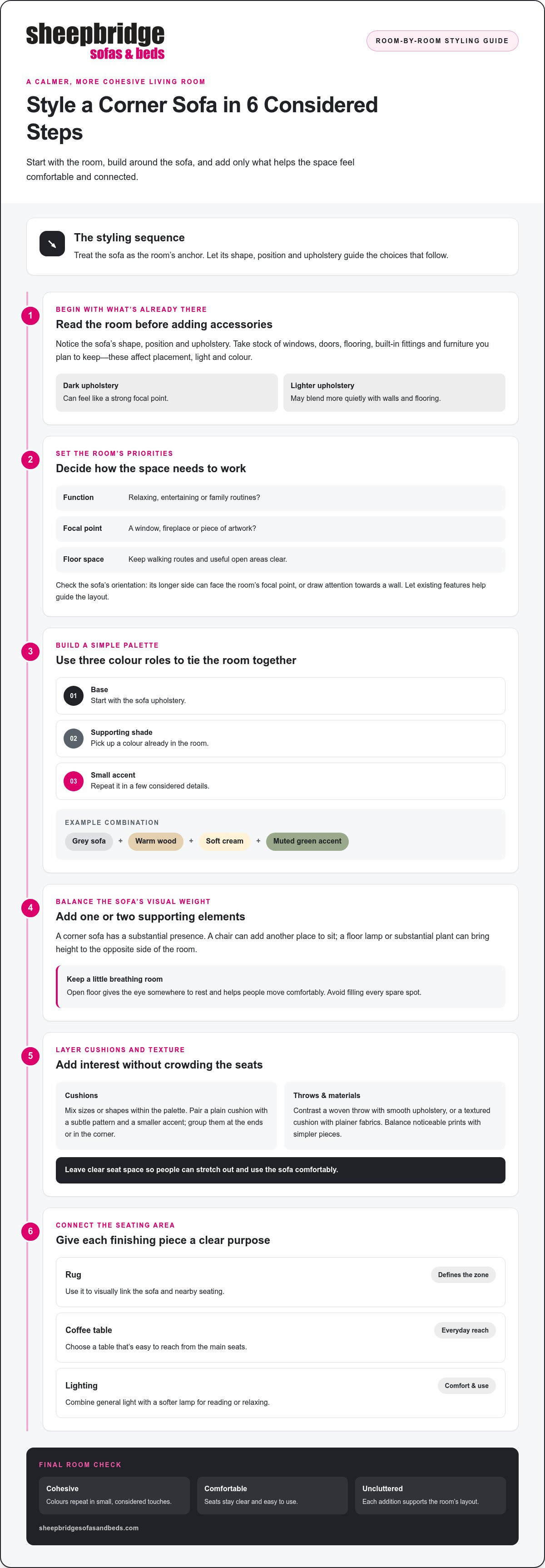
Follow these steps to style your corner sofa without clutter
A calm, pulled-together room doesn’t require a matching furniture set or a trolley full of new accessories. Use what you own, make one change at a time and see how the room works before adding more. This simple routine turns corner sofa styling ideas into practical steps you can try at home.
- Clear. Remove loose cushions, throws and ornaments from the sofa and nearby surfaces. Put them aside, then decide which pieces are useful, comfortable or meaningful enough to return.
- Assess. Take a photo of the room before moving anything. Note the focal point, fixed features and routes you use every day. The picture gives you a helpful before-and-after comparison.
- Position. Arrange the sofa and key furniture around the focal point while keeping walkways open. Check that people can move easily between the doorway, seating and other parts of the room.
- Layer. Add the essentials in stages: first the rug, then lighting, cushions and a throw. Pause after each addition to see whether it improves the room’s comfort or balance.
- Edit. Remove anything that feels crowded, awkward or unnecessary. A few well-chosen pieces can feel more welcoming than a complete matching set.
How do you keep the finished look practical?
Try the arrangement during your usual routines before bringing in more decorative items. Sit in each seat, reach for the table, switch on the lamps and walk through the room as you normally would. Check that controls, switches and frequently used surfaces are easy to reach. If everyday use matters, choose washable or easy-care cushion covers and throws where practical.
Be honest about what isn’t working. If a walkway feels tight, the table is hard to reach or the sofa looks visually uneven, adjust the layout before adding another accessory. Sometimes removing one item is all it takes to make the room feel more comfortable.
If you’re considering a different sofa rather than restyling the one you have, explore corner sofas for your living room.
Finish your corner sofa styling with a personal, welcoming touch
The final touches should feel like you, not like a showroom display. A framed photograph, a couple of books you enjoy or a favourite vase can make the seating area feel lived-in. Choose a few items with meaning, then leave enough clear space for the room to feel calm. Echo a colour from a photograph or vase in a cushion or nearby accessory to tie the details into your scheme.
How can you make the seating area feel like home?
Keep treasured objects visible without letting them crowd the sofa or every nearby surface. For example, display a small selection of books on a side table and place a favourite vase where it won’t interrupt everyday use. Refresh the look with cushion covers, a throw or a few smaller accessories as the seasons change. It’s a simple way to bring in a lighter or cosier feel without replacing the room’s main pieces.
Above all, let comfort and household routines guide your choices. A beautifully arranged sofa still needs to work for relaxing, family time and the way you use the living room each day. If a throw constantly slips off or decorative cushions leave too little room to sit, edit the arrangement until it feels right.
When might a different corner sofa suit the room better?
Styling can make a real difference, but sometimes the sofa itself no longer fits the room’s layout or your routines. It may block a natural walkway, leave too little space for other seating or lack the comfort you want for everyday use. Consider comfort, upholstery and the sofa’s overall visual weight together, then decide whether a fresh arrangement is enough or a different sofa would serve the room better.
If you’re exploring sofa choices, consider which shape and upholstery will work with your space and household. Browse Sheepbridge Sofas & Beds’ corner sofas online or visit the Newry showroom to experience sofas in person. Start with what matters most for your home, then choose a direction that feels comfortable and welcoming.
Make your living room feel welcoming every day
A balanced corner sofa setup starts with the room you have. Let the sofa guide your colour palette, choose cushions and textures with care, then use rugs, tables and layered lighting to make the seating area comfortable and easy to move around. A few personal details can finish the space without adding clutter.
Try one change at a time and keep your household’s routines in mind. The best corner sofa styling ideas are the ones that look good and feel right for everyday relaxing, family time and welcoming guests.
If your current sofa no longer suits your space, explore corner sofas at Sheepbridge Sofas & Beds. This family-run furniture retailer has been established since 2012, with free delivery and installation across Northern Ireland and delivery reaching Dublin. Browse online or visit the Newry showroom to find a sofa that works for your home.
Frequently Asked Questions
How many cushions should you put on a corner sofa?
There’s no fixed number of cushions that suits every corner sofa. Start with a small group at each end or around the corner, then sit in each place to check that the seats remain comfortable and usable. Vary cushion sizes or textures to add interest, but keep their colours connected to the room’s palette. If the sofa feels crowded or cushions keep needing to be moved, take one away and reassess the arrangement.
How do you style a corner sofa in a small living room?
Keep the arrangement light, practical and easy to move around. Choose a restrained colour palette, leave walkways clear and avoid filling every gap with extra furniture. A rug can help define the seating area, while a floor or table lamp adds warmth without taking up much visual space. For useful corner sofa styling ideas, choose accessories that earn their place through comfort or everyday use, rather than adding items just to fill space.
Should a rug go under a corner sofa?
A rug can anchor the seating area and connect the sofa with nearby furniture. Depending on your layout, place the sofa’s front feet on the rug to link the pieces, or position the rug in front of the sofa to define the zone. Check how it sits beside doors, walkways and other furniture before settling on a position. The best arrangement is the one that looks balanced and feels comfortable to use.
What colours go well with a grey corner sofa?
Grey works with a range of colours, so start by considering your flooring, walls and the natural light in the room. Add a supporting neutral for a calm feel, or introduce an accent colour through a cushion, throw or artwork. Repeat that accent elsewhere to help the room feel connected. In a Northern Ireland home, as anywhere, check how your chosen shades look in the room’s own light before making a larger change.
How do you make a corner sofa look less bulky?
Balance the sofa’s visual weight instead of surrounding it with more large furniture. Keep nearby walkways clear and choose accessories that feel light in colour or appearance. A rug can link the sofa to the wider seating area, while a lamp adds height without taking up much floor space. A limited palette can also create a calmer impression. Avoid adding furniture simply to fill open floor, as that can make the room feel more crowded.
Where should a corner sofa go in a living room?
Place the sofa where its shape supports the room’s main focal point and natural movement, such as towards a window or television area. Check that doors, walkways and access to other seats stay clear. The longer side can help define the seating zone, but the best orientation depends on your layout and household routines. If you’re considering a different sofa, Sheepbridge Sofas & Beds in Newry has corner sofas to browse online or in its showroom.
How can I style a corner sofa without buying new furniture?
Start with what you already own. Rearrange cushions, fold a throw over one arm, move a lamp nearer to the seating area or bring a favourite object into view. Editing can be just as effective as adding something new. Try one change at a time, then live with it during your usual routines. Keep the changes that improve comfort and visual balance, and put aside anything that makes the sofa harder to use.