

Convincing My Partner to Buy a New Sofa: A Calm, Practical Guide
What if the best way to replace your sofa isn’t to win the argument, but to agree on what you both need? One of you may find the cushions uncomfortable or the sofa worn, while the other sees no good reason to spend money. If you’re thinking about convincing my partner to buy a new sofa, start with comfort, condition and daily use, not with who’s right.
It’s reasonable to want a sofa that feels comfortable and suits your home. It’s just as reasonable to pause before making a large shared purchase. This guide will help you raise the idea calmly, listen to what matters to your partner and agree on practical priorities before browsing. You’ll also find ways to compare comfort, size, style and budget fairly. The right outcome might be choosing a sofa together, or agreeing to wait until the time feels right.
Key Takeaways
- Approach convincing my partner to buy a new sofa as a shared decision, not a case to win.
- Separate practical frustrations, such as limited seating or discomfort, from personal style preferences.
- Agree on priorities for comfort, room fit, upholstery and budget before comparing sofas.
- Keep browsing manageable by setting boundaries and reviewing a shortlist together.
- Choose a next step you both feel comfortable with, whether that’s measuring your space, trying sofas together at the Newry showroom or waiting.
How to Talk About Getting a New Sofa Without Starting an Argument
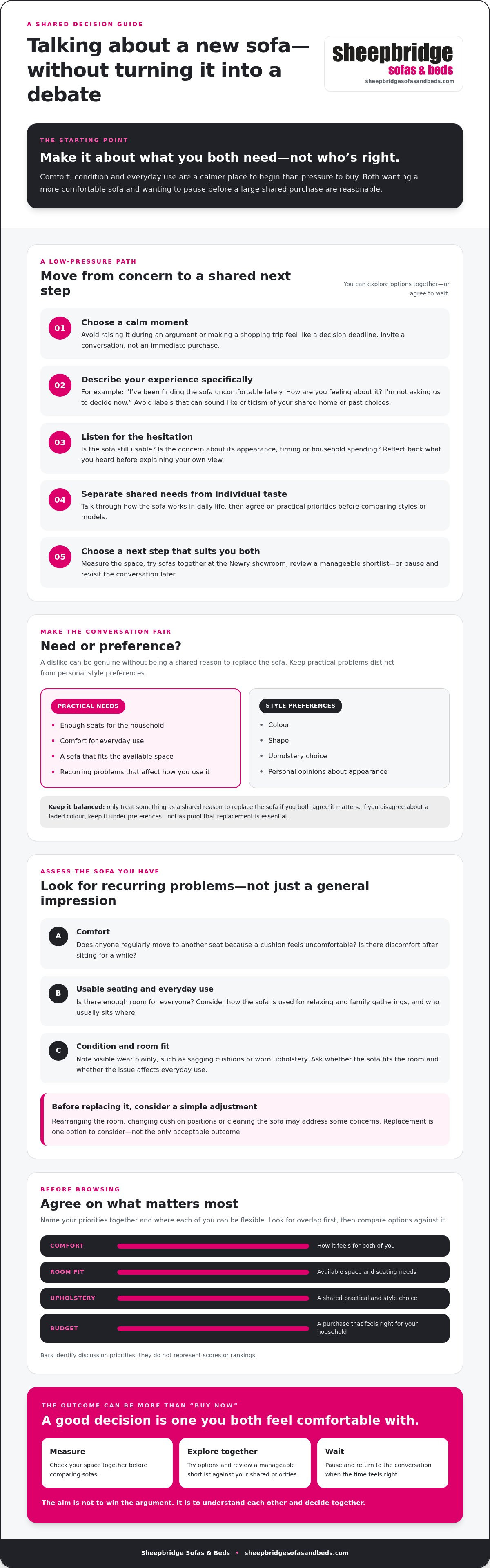
A sofa can feel uncomfortable to one person and perfectly usable to the other. Both views deserve a place in the conversation. If you’re thinking about convincing my partner to buy a new sofa, don’t make the discussion about proving your partner wrong. Focus on what you both need from a sofa you share: a comfortable place to relax, enough seating for everyday life and a purchase that feels right for your household.
Choose a calm moment when neither of you is rushing or already frustrated. A shopping trip can put pressure on your partner to decide before you’ve agreed there’s a problem. Raising the subject during an argument about the sofa may also sound like criticism of a shared choice. Start with curiosity: “I’ve been finding the sofa uncomfortable lately. How are you feeling about it? I’m not asking us to decide now, but could we talk about what’s working and what isn’t?”
How do you bring up replacing a sofa?
Keep your opening specific and non-judgemental. You might mention that there isn’t enough room for everyone to sit comfortably, or that you feel discomfort after sitting for a while. Avoid labels such as “awful” or “embarrassing”, which can sound like an insult to your shared home or past choices. Then ask what your partner thinks and give them time to answer. Raising the idea is an invitation to discuss, not a demand to buy.
How can you listen without turning it into a debate?
Ask what’s behind your partner’s hesitation. Is it that the sofa still feels usable, or is the concern about its appearance, the timing or household spending? Listen before replying, then reflect the concern back: “It sounds like you’re worried we’d be replacing it before we need to.” That shows you’ve heard them, even if you see the situation differently. A collaborative approach, similar to principled negotiation, puts shared interests ahead of winning a point.
Once you understand their view, explain yours without repeating the same case over and over. You might say, “I understand that you think it still has life left. I’d like us to consider how comfortable it is for both of us.” If your partner isn’t ready to explore options, ask whether you can return to the conversation later. A pause can be more productive than pushing for an immediate agreement.
Turn Sofa Frustrations into Shared Reasons for Replacing It
Once you’ve opened the conversation, describe the concern clearly enough that you can assess it together. “I don’t like the colour” is a genuine preference, but it’s different from “there isn’t enough room for all of us to sit comfortably.” Separating practical problems from personal taste helps you avoid treating every dislike as proof that the sofa needs replacing.
Talk through how the sofa works in daily life. Who usually sits where? Is it used for a short evening rest, long stretches of relaxing or family gatherings? Does anyone regularly move to another seat because a cushion feels uncomfortable? Specific examples give you something to assess together, rather than relying on a general impression.
Which signs make it reasonable to consider a replacement?
Look for recurring problems with comfort, usable seating or the sofa’s fit in the room. Note visible wear plainly, such as sagging cushions or worn upholstery, but don’t assume appearance alone makes replacement essential. Ask whether the issue affects everyday use and whether a simple adjustment could help first. Rearranging the room, changing how cushions are positioned or cleaning the sofa may address some concerns. Replacing it is one option to consider, not the only acceptable outcome.
How do you distinguish a need from a style preference?
Make two short lists together: practical needs and style preferences. Needs might include enough seats for the household or a sofa that fits the available space. Preferences could include colour, shape or upholstery. Each partner can name what matters most and where they’re flexible. Look for overlap before comparing individual sofa styles or models. That keeps browsing connected to shared priorities instead of turning into competing personal shortlists.
Only record points you both agree are important. If one person considers a faded colour a problem and the other doesn’t, keep it under preferences rather than presenting it as a shared reason to replace the sofa. That distinction makes the conversation fairer and avoids creating urgency where you don’t both feel it. Guidance on making purchasing decisions in a partnership also emphasises communication and avoiding pressure, useful principles for keeping this choice collaborative.
If you agree that exploring alternatives makes sense, browsing together can help you compare options against your shared needs. Sheepbridge Sofas & Beds offers manual and electric recliner sofas, corner sofas, and fabric and leather sofa suites to explore at Sheepbridge Sofas & Beds. You don’t need to decide until you’ve both considered what would genuinely work better.
Agree on Sofa Priorities Before Comparing Styles
Before browsing, turn the needs you’ve agreed on into a short checklist. This gives you a fair way to compare options and helps prevent an appealing colour or shape from distracting you from practical requirements. It can also make convincing my partner to buy a new sofa feel less like a sales pitch: you’re checking choices against criteria you both helped set.
Keep the checklist focused on what matters in your home:
- Comfort: What kind of support or seat feel do you each prefer?
- Room fit: What size and shape will work in the available space?
- Seating: How many people need to sit comfortably at once?
- Upholstery: Do you both prefer fabric or leather?
- Budget: What spending limit feels comfortable to you both?
Make each person’s preferences visible and agree how important they are before viewing options. For example, you could mark room fit as a high priority for both, while noting that one person prefers leather and the other is flexible. This makes differences easier to discuss without treating either person’s taste as the deciding vote.
How do you choose a sofa that suits both partners?
Each of you can name one must-have and one area where you’re willing to compromise. Depending on your needs, compare manual or electric recliner sofas, a corner sofa, or fabric and leather options. Don’t assume you’ll agree on comfort from a description alone. If possible, try shortlisted sofas together and give each person time to sit in their usual position.
How should couples discuss budget without pressure?
Agree on a household spending limit before looking at specific sofas. Talk about what feels manageable, whether the timing is right and whether saving for longer would make the purchase more comfortable. If you haven’t agreed on a budget, pause the search rather than letting a showroom visit create pressure. Finance doesn’t need to be part of the discussion unless you both independently want to explore it.
For more background on comparing sofa types, materials and practical considerations, you can also read Sofas Newry: The Ultimate Guide to Quality, Style & Local Delivery in 2026. Use it to inform your questions, then return to the checklist you made together. The goal isn’t to find a sofa that matches every preference perfectly. It’s to identify options that meet your shared priorities and stay within a budget you’ve both agreed on.
Make a Joint Sofa Decision with a Fair, Low-Pressure Process
A clear process helps keep sofa shopping from becoming a contest of preferences. Agree to move through four steps: confirm what you need, set boundaries for budget and browsing, shortlist suitable options, then review them together. Decide in advance how many sofas you’ll compare so browsing stays focused instead of becoming an endless scroll.
- Agree on needs: Use the priorities you both identified, such as comfort, seating and room fit.
- Set boundaries: Confirm your spending limit and how much time you want to spend browsing.
- Shortlist: Keep only options that meet the shared requirements.
- Review together: Compare the shortlist calmly before deciding whether to buy, wait or keep looking.
If you disagree, pause instead of repeating the same arguments. Check each option against your shared criteria and identify the difference: does a sofa miss a must-have, or does it simply suit one person’s taste more? If buying now doesn’t feel right, agree on a date to revisit the conversation or a practical change that would prompt another look.
What if one partner wants a new sofa and the other does not?
Ask the hesitant partner what information or change might make them willing to reconsider. Perhaps they’d like to measure the room first or would feel more comfortable waiting until a planned budget review. Consider whether rearranging the room or another temporary adjustment could help in the meantime. A genuine disagreement deserves respect. Agreement shouldn’t be something one person has to extract from the other.
How can you compare shortlisted sofas fairly?
Apply the same checklist to every option, without changing the standards to favour a favourite. Measure the room and access points, then check the exact sofa dimensions before committing. If possible, both of you should try each shortlisted sofa and discuss comfort and upholstery upkeep. A showroom visit, such as Sheepbridge’s in Newry, can help you compare how different sofas feel in person.
Make your final review together, with each person explaining what works and what doesn’t against the agreed priorities. If no option meets enough shared needs, keep looking or wait. If you’re ready to compare sofas in person, visit the Sheepbridge Sofas & Beds website to explore the range and check showroom details before travelling.
Take the Next Step Together, Whether You Buy Now or Later
The next step doesn’t have to be a purchase. Choose one small action you’re both comfortable with: measure the room, check the route the sofa would need to take into the house, or revisit your shared checklist. A practical step can help you learn more without putting either partner under pressure to decide. If you’re looking for advice on convincing my partner to buy a new sofa, remember that moving forward together matters more than reaching a quick yes.
When is it useful to see sofas in person?
A showroom visit can help if you can’t judge comfort, seating position or upholstery feel from online descriptions and pictures. Sheepbridge Sofas & Beds has a showroom in Newry where you can see and try sofas. Check visit details before travelling, then use the same agreed criteria for each shortlisted option. Both partners can sit in their usual position and compare how each sofa feels. Looking is a way to gather information, not a commitment to buy.
Before choosing a sofa, check its dimensions against your room measurements and consider whether it can be brought through the doors and access points. If you’re in Northern Ireland, Sheepbridge offers free delivery and installation across the region. Confirm the relevant details for your circumstances as you weigh up practical next steps.
What if the right decision is to wait?
Waiting can be a shared decision, not a failure to agree. Note the points you both consider important, such as comfort, seating or room fit, and record any unresolved concerns. Then choose a mutually acceptable time or condition for reviewing the question, perhaps after you’ve measured the space or had time to consider the household budget. This gives the conversation a clear next step without requiring you to restart the debate every few days.
A good decision is one both people can stand behind, whether that means choosing a sofa, continuing to compare options or keeping the current one for now. If you’d both like to browse without committing, you can explore sofa options at Sheepbridge and decide together whether a showroom visit or another step makes sense. The choice remains yours as a couple.
Choose Your Next Step Together
Replacing a sofa doesn’t have to be a debate with a winner and a loser. Start with everyday issues you both recognise, separate practical needs from style preferences, and agree on shared priorities before comparing options. A calm conversation and a fair process can make convincing my partner to buy a new sofa less about persuasion and more about finding out what works for you both. If waiting feels right, agreeing when to revisit the decision is a useful step too.
When you’re ready to explore, Sheepbridge Sofas & Beds is an independent, family-run retailer established in 2012, with a showroom in Newry where you can view and try sofas together. For Northern Ireland households, free delivery and installation are also available. Take a look at the options at your own pace, then decide together whether a visit makes sense.
Explore sofas together and take your time choosing. A good choice is one you can both feel comfortable with, whether you make it now or later.
Frequently Asked Questions
How do I convince my partner to buy a new sofa?
Approach convincing my partner to buy a new sofa as a shared conversation, not a campaign to secure a yes. Explain one specific issue, such as not having enough comfortable seats, then ask how your partner feels about the sofa. Listen to their concerns and agree on practical priorities before browsing. You may decide to shop, make a temporary adjustment or revisit the idea later. The aim is a decision you can both support.
What if my partner thinks our sofa is still fine?
Ask what makes the sofa feel usable to them, then share your experience without dismissing their view. You might compare how well it suits your everyday needs, including available seating and comfort. If you don’t agree that replacement is needed, consider whether rearranging the room or another temporary change could help. You can also agree on a future point to reassess, rather than treating a different opinion as an immediate obstacle.
How do couples choose a sofa they both like?
Start with shared criteria before comparing styles. Each partner can name a must-have and an area where they’re flexible, then agree how important comfort, room fit, seating, upholstery and appearance are. Keep personal preferences distinct from practical requirements. If possible, both of you should try the same shortlisted sofas, since comfort can feel different from person to person. Compare each option against the agreed checklist instead of choosing by first impression alone.
Should we agree on a budget before looking at sofas?
Yes. Set a comfortable household spending limit together before viewing specific options. This helps you assess choices fairly and reduces pressure to consider something beyond what you’ve agreed. Discuss whether now is the right time or whether saving for longer would feel more manageable. If you can’t settle on a limit, pause the search and return to the conversation later. Don’t treat finance as the default answer; explore it only if you both want to.
How can I discuss replacing a sofa without criticising my partner?
Describe what you notice rather than judging the sofa or your partner’s choice. For example, say, “I’m finding it uncomfortable after sitting for a while,” instead of calling it awful or blaming them for keeping it. Ask for their perspective before suggesting a replacement. Make clear that raising the subject doesn’t mean a decision is needed now. That keeps the conversation focused on shared comfort and household needs, not fault.
Should we visit a showroom before choosing a sofa?
A showroom visit can help if it’s difficult to judge seat comfort, position or upholstery feel online. In Newry, Sheepbridge Sofas & Beds has a showroom where you can view and try sofas together. Check visit details before travelling, and compare the same shortlisted options against your shared priorities. A visit doesn’t oblige you to buy. If you’re in Northern Ireland, Sheepbridge also offers free delivery and installation across the region, which you can consider when reviewing practical arrangements.